The Criminalisation of Cannabis in the Global South
Cannabis prohibition in the Global South is no longer a public health policy. It is an inherited governance mechanism, maintained despite overwhelming scientific evidence, divergent international practice, and demonstrable social harm.
While large parts of the Global North have legalized or regulated cannabis for medical and recreational use, many Global South countries continue to impose severe criminal penalties for possession, cultivation, or even paraphernalia. This divergence cannot be explained by evidence of harm. It can be explained by history, institutional inertia, and the utility of prohibition as a means of social control.
This article traces the origins of cannabis criminalisation, evaluates the scientific record, examines contemporary outcomes in Global South jurisdictions, and argues that continued prohibition represents a failure of governance rather than caution.
Reform is no longer a moral question. It is an institutional necessity.
| Substance | Annual Global Deaths | Legal Status (Most Countries) |
|---|---|---|
| Tobacco | 8,000,000 | Legal, regulated |
| Alcohol | 2,600,000 | Legal, regulated |
| Cannabis | 0 | Criminal penalties |
This table presents the most devastating indictment of contemporary drug policy. Cannabis, which causes zero documented direct mortality, remains criminalized in most Global South countries. Alcohol and tobacco, which kill more than 10 million people annually, remain legal and commercially promoted.
The Origins of a Prohibition Without Evidence
Cannabis prohibition did not emerge from medical consensus. It emerged from political anxiety. The most definitive early scientific examination of cannabis use was conducted in the United States itself.
In 1938, New York City Mayor Fiorello La Guardia commissioned an independent investigation into cannabis, responding to alarmist claims made by federal narcotics officials. The result was the LaGuardia Committee Report (1944). Its conclusions were unequivocal.
In 1944, New York Mayor Fiorello La Guardia commissioned the most comprehensive scientific investigation of cannabis ever conducted in the United States. The LaGuardia Committee, composed of physicians, psychiatrists, pharmacologists, and public health officials, spent six years studying cannabis use in New York City.
Their findings directly contradicted every claim made by Harry Anslinger, then head of the U.S. Federal Bureau of Narcotics. The report concluded:
- Cannabis was not associated with violent crime
- It did not produce physical addiction
- It did not lead to insanity
- It did not act as a gateway to harder drugs
- It did not degrade moral character
- Medical evidence failed to support prohibition claims
Rather than prompting reform, the report was suppressed. Copies were destroyed. Its findings were ignored. Instead, prohibition intensified. This was not a scientific decision. It was a political one.
Eighty-one years later, many Global South governments continue enforcing a doctrine that American scientists debunked before their countries gained independence.
From American Panic to Global Policy
Despite the absence of scientific justification, cannabis prohibition was internationalized through U.S.-led diplomacy and the emerging architecture of global drug control. The 1961 UN Single Convention on Narcotic Drugs grouped cannabis with heroin and cocaine, embedding prohibition into international law.
Many Global South countries (newly independent or still under colonial administration) adopted these frameworks wholesale. In former British and French colonies, including Mauritius, Seychelles, parts of Africa and South Asia, cannabis laws were incorporated into penal codes designed for discipline rather than public health.
These laws were rarely revisited after independence. What persisted was not evidence-based policy, but legal inheritance.
What the Evidence Actually Shows
Modern science has not only failed to validate prohibition. It has dismantled its core assumptions.
The World Health Organization and multiple comparative studies rank cannabis as significantly less harmful than alcohol and tobacco when assessed across mortality, addiction potential, social harm, and violence association. Alcohol is responsible for approximately 2.6 million deaths annually worldwide (WHO, 2019 data). Tobacco causes over 8 million deaths per year (WHO, 2024). Cannabis causes no documented direct mortality.
The U.S. National Academies of Sciences, Engineering, and Medicine (2017) concluded: conclusive evidence for chronic pain relief, substantial evidence for chemotherapy-induced nausea, moderate evidence for sleep disorders, and no conclusive evidence linking cannabis to violent behaviour.
The U.S. Drug Enforcement Administration's own fact sheet states: "No deaths from overdose of marijuana have been reported." The National Institute on Drug Abuse reports that the lethal dose of THC is extremely high, making it nearly impossible to overdose on cannabis. A 2022 peer-reviewed study in the Journal of Psychopharmacology examining deaths in England (1998-2020) concluded: "The risk of death due to direct cannabis toxicity is negligible."
Cannabis appears in the Atharva Veda, the fourth book of the Vedas (sacred Hindu scriptures compiled around 2000-1400 BC), as one of the five most sacred plants on Earth. Book 11, Hymn 6, Verse 15 states:
दर्भो भङ्गो यवः सह ते नो मुञ्चन्त्व् अंहसः॥
"To the five kingdoms of the plants which Soma rules as Lord we speak. Darbha, bhang, barley, mighty power: may these deliver us from woe."
The Vedas describe cannabis as "a source of happiness, joy-giver, liberator that was compassionately given to humans to help us attain delight and lose fear." The texts state that "a guardian angel lives in the bhang leaf" and that it "releases us from anxiety."
For four millennia, cannabis was integral to Hindu spiritual practice, Ayurvedic medicine, and social ceremonies. It was consumed during festivals like Holi and Maha Shivaratri. Warriors took bhang before battle. Ascetics used it for spiritual transcendence. The god Shiva became known as the "Lord of Bhang."
Then came colonialism. And prohibition.
What the British Found in 1894
When the British colonial administration considered prohibiting cannabis in India, they commissioned the Indian Hemp Drugs Commission Report (1894). After conducting over 1,100 standardized interviews throughout India, the Commission concluded:
"Suppressing the use of herbal cannabis (bhang) would be totally unjustifiable. Its use is very ancient, has some religious sanction among Hindus, and is harmless in moderation. In fact, more harm was done by alcohol."
The Commission noted that prohibition "would be difficult to enforce, encourage outcries by religious clerics, and possibly lead to the use of more dangerous narcotics."
One hundred thirty years later, Global South governments ignore their own colonial administrators' evidence-based conclusions.
Criminalizing Sacred History
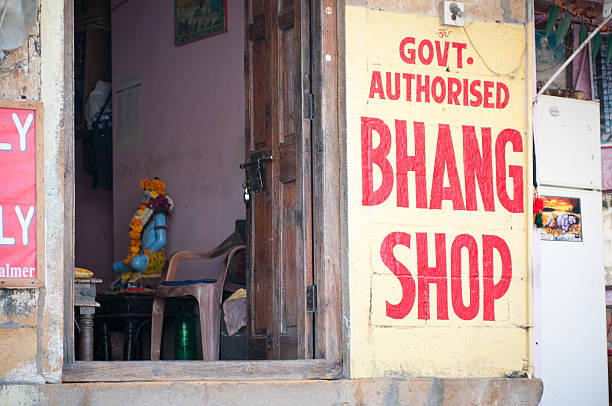
Cannabis is indigenous to parts of China, India and Central Asia. It appears in Hindu, Buddhist, and Ayurvedic traditions. Government-authorized bhang shops still operate legally in India today. Thailand has decriminalized cannabis with minimal social disruption. Nepal tolerates traditional use. Jamaica legalized cannabis and reported improved dignity outcomes and reduced criminalisation.
By contrast, many Global South states criminalize a plant embedded in their own history for four thousand years, while embracing alcohol and tobacco introduced through colonial trade. Governments prosecute citizens for possessing a plant their ancestors considered sacred, a plant mentioned in their holiest texts as a gift from the divine.
This is not public health. It is cultural erasure. It is narrative control.
In much of the Global South, cannabis remains criminalized even as states struggle with synthetic drug trafficking, opioid abuse, alcohol-related violence, overstretched prisons, and underfunded health systems.
Mauritius, for example, imposes severe penalties for possession of cannabis, cannabis seeds, rolling papers, and minimal quantities without intent to distribute. Yet alcohol remains the leading contributor to road fatalities, hard drug trafficking persists, prisons are overcrowded, and allegations of drug planting and selective enforcement recur.
This is not control. It is misallocation.
Criminalisation as a Control Tool
Cannabis prohibition persists not because it works, but because it is useful. Criminalisation expands police discretion, justifies enforcement budgets, enables surveillance of marginal populations, creates leverage over youth and the poor, and attracts international "drug control" funding.
In many Global South countries, drug enforcement has become an industry. Yet UNODC data shows no correlation between enforcement intensity and reduced availability. What enforcement does produce is mass incarceration, selective prosecution, and the erosion of civil liberties.
In 2001, Portugal decriminalized the personal use and possession of all drugs, including cannabis, heroin, and cocaine. Violations are treated as administrative matters, not criminal offenses. Drug trafficking remains criminal.
Two decades later, the outcomes are unambiguous:
Youth drug use (ages 15-24) declined throughout the first decade. Lifetime cannabis use among critical age groups (13-18) decreased for virtually every substance. Portugal now has the lowest drug-related death rate in Western Europe: one-tenth of Britain's rate, one-fiftieth of the United States'.
Most importantly, there was no sustained increase in drug consumption. The policy saw increased treatment uptake, reduced stigma, and comprehensive harm reduction without creating a public health crisis.
Cost per citizen: less than $10 per year. Meanwhile, the U.S. spent over $1 trillion on drug enforcement over the same period with objectively worse outcomes.
What Legalization Actually Changes
Evidence from jurisdictions that have legalized or decriminalized cannabis shows no sustained increase in youth use, reduced incarceration rates, diminished black-market activity, improved patient access to treatment, and redirection of policing resources.
Portugal's decriminalization model remains one of the most cited successes in harm reduction. Canada's 2018 legalization has not produced the social chaos predicted by prohibitionists. Uruguay, Thailand, and multiple U.S. states demonstrate that cannabis policy reform does not require social catastrophe.
Human behaviour is exploratory. Prohibition has never eliminated drug use. It has only made it more dangerous.
The role of government is not to wage war on substances, but to regulate safety, reduce harm, educate populations, and treat addiction as a health issue.
Cannabis prohibition has failed on every metric it claims to protect.
Why Reform Is Inevitable
For Global South governments, continued cannabis criminalisation now carries tangible costs: legal inconsistency with international practice, credibility gaps in public health policy, overburdened justice systems, erosion of trust among youth, exposure to future legal and human rights challenges, and the profound hypocrisy of criminalizing plants their ancestors revered for millennia.
The WHO, the U.S. National Academies of Sciences, the European Monitoring Centre for Drugs, and multiple UN agencies have all published evidence that undermines the scientific basis for cannabis prohibition. When your own law enforcement agencies acknowledge that alcohol and tobacco are deadlier by orders of magnitude, when your own sacred texts describe cannabis as divinely given, when your own colonial administrators concluded prohibition was unjustifiable, the policy becomes indefensible.
Reform is no longer radical. Inaction is.
Control or Evidence
The question facing Global South governments is not whether cannabis is harmful. That question was answered decades ago. The LaGuardia Committee answered it in 1944. The Indian Hemp Drugs Commission answered it in 1894. The National Academies answered it in 2017. The WHO answered it in 2016. Portugal answered it in practice from 2001 onward. The Atharva Veda answered it four thousand years ago.
The real question is whether states will continue enforcing a disproven doctrine because it preserves inherited authority, or whether they will accept that dignity, public health, cultural integrity and evidence demand reform.
Cannabis causes zero documented direct mortality. Tobacco kills 8 million people annually. Alcohol kills 2.6 million. Yet only cannabis remains subject to criminal penalties in most Global South jurisdictions.
This disparity cannot be explained by public health concerns. It can only be explained by institutional inertia, colonial legacy, and the utility of prohibition as a governance tool.
What is being defended today is not safety. It is control. History will not be neutral on the difference.
Mortality data sourced from the World Health Organization Global Status Report on Alcohol and Health (2024, based on 2019 data), WHO Tobacco Fact Sheet (2024), and U.S. National Institute on Alcohol Abuse and Alcoholism. Alcohol deaths: 2.6 million annually (WHO, 2019). Tobacco deaths: Over 8 million annually, including 7 million from direct use and 1.2-1.3 million from secondhand smoke (WHO, 2024; PAHO, 2024).
Cannabis mortality data from multiple authoritative sources: U.S. Drug Enforcement Administration Fact Sheet ("No deaths from overdose of marijuana have been reported"), National Institute on Drug Abuse (lethal dose of THC is extremely high, nearly impossible to overdose), Journal of Psychopharmacology peer-reviewed study (Rock et al., 2022: "The risk of death due to direct cannabis toxicity is negligible"), and U.S. National Academies of Sciences, Engineering, and Medicine report (2017).
Religious and historical references verified through Atharva Veda (Book 11, Hymn 6, Verse 15), Vedic literature compilations (2000-1400 BC), Indian Hemp Drugs Commission Report (1894), Ayurvedic texts (Sushruta Samhita, Charaka Samhita), and academic studies on Hindu cannabis traditions. Portugal decriminalization outcomes from European Monitoring Centre for Drugs and Drug Addiction reports (2001-2023), Cato Institute White Paper (Greenwald, 2009), Transform Drug Policy Foundation analysis, UNODC data, IZA Institute of Labor Economics working papers, and multiple peer-reviewed studies in criminology and public health journals. LaGuardia Committee Report details verified through original 1944 publication "The Marihuana Problem in the City of New York." All statistics cross-referenced with original source documentation to ensure institutional accuracy.
Add comment
Comments