As I See It
Vayu Putra
Chapter 11
Mental Health in a Broken World
It is 2:47 AM and you are awake.
Your phone glows in the darkness. You check it though you know you should not. Seventeen new emails since you went to bed at 11:30. Three are marked urgent. One is from your manager sent at 1:15 AM with subject line "Quick question"—which never actually means quick. Your heart rate increases. Your jaw clenches. Sleep, already elusive, now feels impossible.
You scroll. Climate disaster in Asia. Political crisis in Europe. Mass shooting in America. Inflation rising. Layoffs announced. Housing prices up. Your retirement account down. A friend's carefully curated vacation photos. Another friend's promotion announcement. Everyone appears successful, happy, thriving—except you, lying here at 2:47 AM with racing thoughts about deadlines, debt, and existential dread.
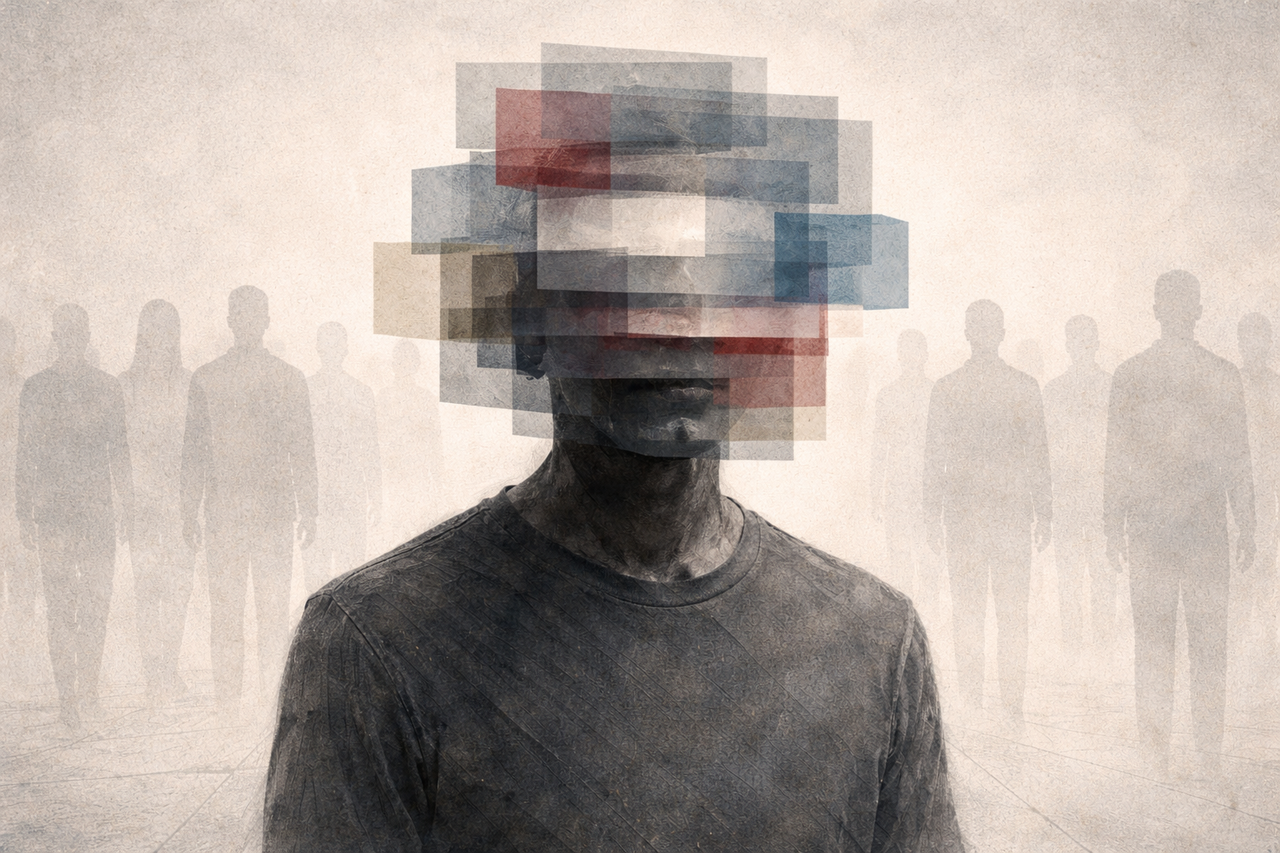
Is this mental illness or rational response to conditions that warrant dread? This question matters because the answer determines whether the solution involves treating individuals or transforming systems. Modern mental health discourse assumes the former almost by default. This chapter argues for the latter.
The evidence is overwhelming. In the United States, according to the National Institute of Mental Health, major depression affects 21 million adults—8.4% of the population. Anxiety disorders affect 40 million adults—19.1% of the population. These rates have increased substantially over recent decades, particularly among young people. Between 2009 and 2019, rates of depression among adolescents increased 60%. Emergency department visits for self-harm among girls aged 10-14 tripled. Suicide rates increased 33% between 1999 and 2017.
This chapter examines mental health not as individual malfunction but as social indicator, exploring how modern environments systematically produce psychological distress, why emerging mental health conditions reflect technological and economic changes, what neurological mechanisms explain rising anger and urgency, and why addressing mental health at scale requires transforming conditions rather than merely treating symptoms.
A day in the life of modern anxiety
The alarm sounds at 6:15 AM. You hit snooze twice, sacrificing breakfast time for ten more minutes of not-really-sleep. You check your phone before getting out of bed—research by productivity app RescueTime shows this is when the first of an average 96 daily phone checks occurs. Already your nervous system is activating, cortisol rising not from physical danger but from digital demands.
The commute takes 55 minutes each way—up from the 40 minutes it took five years ago before gentrification pushed you further from the city center where you work. U.S. Census data shows average commute time increased from 22 minutes in 1980 to 27.6 minutes in 2019, but this understates reality for those priced out of proximate housing. Your commute represents 11 hours weekly of pure lost time—neither working nor living, just moving between the two.
You sit in traffic that should not exist, highways built for fewer vehicles now overwhelmed by commuters forced to live far from work. Someone cuts in front of you and rage flashes through your nervous system disproportionate to the offense. Road rage incidents have increased 500% since 1990 according to National Highway Traffic Safety Administration data. You arrive at work already depleted, already angry, though the workday has not begun.
Your workspace includes productivity monitoring software that tracks every keystroke, every email, every minute spent on each task. Studies by workplace surveillance company Hubstaff show 60% of companies now use some form of employee monitoring. You are aware that your performance is being quantified, compared against colleagues, evaluated by algorithms you did not design. The sensation is not paranoia but accurate perception of surveillance that is real and continuous.
The morning brings three back-to-back Zoom meetings. Research from Stanford's Virtual Human Interaction Lab identified "Zoom fatigue" as distinct form of exhaustion produced by video conferences. The cognitive load from processing non-verbal cues on screens, self-viewing that increases self-evaluation, reduced mobility, and increased cognitive effort combine to produce fatigue that feels disproportionate to the meeting's substance. You spend more energy managing your appearance and monitoring others' reactions than engaging with content.
Lunch is eaten at your desk whilst responding to emails—research by Gloria Mark at UC Irvine shows office workers are interrupted every three minutes on average and require 23 minutes to fully return to interrupted tasks. You never achieve flow state. You never experience deep focus. Your work day is fragmented into countless shallow interactions, each requiring context-switching that drains cognitive resources.
At 4:30 PM, your manager sends a Slack message: "Do you have a minute?" Your heart rate spikes. In office culture, this phrase rarely means good news. The "quick chat" becomes a 45-minute discussion of new metrics, new targets, new initiatives. Your responsibilities expand. Your authority does not. Your job now includes tasks previously done by three people before the last restructuring. Burnout is framed as your time management problem, not as organizational design failure.
You leave at 6:20 PM though your contract specifies 5:00 PM end time. Leaving "on time" is culturally read as insufficient commitment. Research published in Academy of Management Journal found that expectation of availability outside work hours creates stress equivalent to 20% increase in workload. The commute home takes longer than the morning—rush hour has extended as more people work longer to appear sufficiently dedicated.
Home at 7:30 PM. You eat dinner whilst watching Netflix, phone beside you, laptop open for the emails that continue arriving. Research shows the average person checks their phone 96 times daily, or once every 10 minutes during waking hours. Each notification fragments attention, triggers comparison through social media, delivers news of crises you cannot affect. Your nervous system cannot distinguish between urgent work email and genuinely life-threatening danger. It treats all unexpected stimuli as potential threats requiring immediate assessment.
By 10 PM you are exhausted but wired. You scroll Instagram—everyone else's curated highlight reels making your life feel inadequate. You watch news—climate disasters, political dysfunction, economic crises, social conflicts. You try to sleep but your mind cycles through tomorrow's obligations, next month's rent, next year's uncertainty. The CDC reports that one-third of American adults regularly sleep less than seven hours nightly—below the minimum recommended for health.
This is not exceptional day. This is normal day. And this is why you are anxious.
The evolutionary mismatch
Your nervous system evolved over hundreds of thousands of years to handle specific types of challenges: immediate physical threats, social conflicts within small groups, periodic resource scarcity, and dangers that required quick response then resolved. The stress response—increased heart rate, cortisol release, heightened alertness, redirection of blood flow to muscles—prepared your ancestors to fight, flee, or freeze when confronting predators, hostile groups, or natural disasters.
Critically, these threats were acute rather than chronic. A predator appears, the stress response activates, you escape or fight, the threat passes, stress hormones decline, the body returns to baseline. This cycle—activation, response, resolution, recovery—is how the stress system was designed to function. Anthropologist Robert Sapolsky's research, detailed in "Why Zebras Don't Get Ulcers" (2004), emphasizes that wild animals experience intense stress regularly but suffer few chronic stress-related illnesses because stressors are typically brief and followed by recovery periods.
Modern environments break this cycle. Your stressors are chronic rather than acute, abstract rather than physical, and crucially, unresolvable through the actions stress responses evolved to support. You cannot fight or flee from debt, deadlines, or climate change. The nervous system activates as if these were immediate physical threats, but the threat never passes. You remain in permanent low-grade activation that your ancestors never experienced.
The health consequences are severe and well-documented. Chronic elevation of cortisol—the primary stress hormone—impairs immune function, increases inflammation, damages cardiovascular health, disrupts sleep, and affects cognition and mood. Research published in the Proceedings of the National Academy of Sciences shows that chronic stress physically shrinks the hippocampus, a brain region critical for memory and emotional regulation, whilst expanding the amygdala, which processes fear and threat.
Sleep provides clear example of mismatch. Humans evolved to sleep when it became dark, approximately eight hours nightly, in synchronized circadian rhythms tied to sunlight exposure. Modern life involves artificial light extending wakefulness, screens emitting blue light that suppresses melatonin, shift work disrupting circadian rhythms, and constant connectivity making sleep feel like lost productivity.
Research by sleep scientist Matthew Walker, documented in "Why We Sleep" (2017), shows that insufficient sleep increases risk of Alzheimer's disease, cardiovascular disease, diabetes, obesity, and mental health disorders whilst impairing cognitive function, emotional regulation, and immune response. Walker describes sleep deprivation as having effects comparable to being legally drunk, yet society normalizes chronic sleep insufficiency as price of productivity.
Social environments present similar mismatch. Humans evolved for groups of approximately 150 individuals—"Dunbar's number" identified by evolutionary psychologist Robin Dunbar as the cognitive limit for maintaining stable social relationships. Your ancestors knew everyone in their social world intimately, interacted face-to-face, and could read social cues through tone, expression, and body language.
Now you maintain hundreds or thousands of "connections" on social media, interact primarily through text and images, and receive constant social comparison against curated representations of others' lives. Research by psychologist Jean Twenge and colleagues, published in Clinical Psychological Science in 2018, found strong correlations between time spent on social media and rates of depression and loneliness, particularly among adolescents who have never known life without smartphones.
When the world changed: a timeline of deterioration
Mental health crises did not emerge randomly. They correlate with specific policy choices, technological changes, and economic transformations that occurred at identifiable moments in recent history. Understanding this timeline reveals that rising distress reflects social changes rather than individual weakness.
1970s: The end of the social contract. For roughly three decades after World War II, workers in developed nations experienced rising wages, expanding benefits, pension security, and reasonable expectation that hard work would provide comfortable retirement. This ended in the 1970s with stagflation, oil crises, and the rise of neoliberal economics emphasizing deregulation, privatization, and reduced worker protections.
In 1970, the average CEO-to-worker pay ratio in the United States was 21:1. By 2020, it had reached 351:1 according to Economic Policy Institute data. Productivity and wages, which tracked together from 1948 to 1973, diverged dramatically afterward. Between 1973 and 2020, productivity increased 77.5% whilst median compensation increased only 17.5%. Workers produced far more value but captured minimal benefit, with gains flowing overwhelmingly to capital rather than labor.
1980s: Deregulation and the destruction of stability. The Reagan and Thatcher administrations accelerated policies undermining worker security. Union membership declined from 20.1% of U.S. workers in 1983 to 10.3% by 2021. Without collective bargaining power, workers lost ability to negotiate for better conditions. Simultaneously, financial deregulation enabled the capital mobility and corporate restructuring that would characterize subsequent decades.
Pension systems shifted from defined benefit (guaranteed retirement income) to defined contribution (401k plans where workers bear market risk). This transferred financial insecurity from employers to employees. Housing, healthcare, and education costs began rising faster than wages, creating squeeze where middle-class lifestyle required debt rather than being achievable through work alone.
1990s-2000s: The acceleration of work. Technology that promised liberation produced intensification. Email, mobile phones, and laptops eliminated boundaries between work and non-work time. The expectation of constant availability became normalized. Sociologist Juliet Schor's research in "The Overworked American" (1992) documented that despite technology, work hours increased and leisure time declined—opposite of predictions that automation would create more free time.
The internet enabled outsourcing and globalization that destroyed stable employment in manufacturing. Communities built around industries—steel, automotive, textiles—collapsed as production moved to countries with lower wages and fewer regulations. Economist David Autor's research shows that U.S. manufacturing employment fell from 19.4 million in 1979 to 12.8 million by 2010, devastating regions dependent on those jobs.
2007-2008: Financial crisis and the erosion of trust. The financial crisis revealed that the system was rigged, that financial institutions engaged in fraud, that regulators had been captured, that consequences would be borne by ordinary people whilst elites were bailed out. Trust in institutions, already declining, collapsed further. Political scientist Francis Fukuyama's research documents trust as essential for social functioning—when it disappears, societies fracture.
The crisis destroyed $10 trillion in global wealth, triggered millions of foreclosures, and produced unemployment that peaked at 10% in the United States. Recovery was slow and uneven. By 2016, median household wealth had not returned to pre-crisis levels for most Americans whilst the wealthiest saw rapid recovery and growth. This created visible bifurcation: one economy for elites, another for everyone else.
2007-2010: The smartphone revolution. The iPhone launched in 2007. By 2010, smartphones were ubiquitous. By 2015, social media use was near-universal among young people. This represented transformation more fundamental than most recognized at the time. For the first time in human history, people carried devices designed to capture and monetize attention, devices that could interrupt at any moment, devices that tracked behavior and optimized for engagement rather than wellbeing.
Research by Jean Twenge shows that 2012-2015 marks inflection point when adolescent mental health problems began accelerating dramatically. This timing corresponds exactly with smartphone saturation and social media adoption. The correlation is not coincidental—experimental studies reducing social media use show improvements in wellbeing, suggesting causation rather than mere correlation.
2010s: The gig economy and the end of employment security. Uber launched in 2010, TaskRabbit in 2008, DoorDash in 2013. The "gig economy" was marketed as flexibility and entrepreneurship. Actually it represented destruction of employment relationship—no benefits, no security, no protections, algorithmic management, and transfer of all risk to workers classified as independent contractors to avoid labor law requirements.
By 2023, Federal Reserve data showed 36% of workers engaged in contingent or alternative employment. These workers face income volatility, lack healthcare, have no retirement benefits, and can be fired instantly by algorithm. Sociologist Guy Standing's research on the "precariat" describes this growing class experiencing profound insecurity that previous generations would have considered intolerable.
2020-present: Pandemic and the breaking point. COVID-19 exposed every structural weakness. Healthcare systems overwhelmed. Essential workers forced to risk infection whilst unable to afford missing work. Remote work revealed that many jobs could have offered flexibility all along. Billionaire wealth increased dramatically whilst millions faced unemployment and eviction. The contradictions became impossible to ignore.
Mental health problems that were already accelerating reached crisis levels. The CDC reported 40% of adults experiencing mental health or substance abuse issues during the pandemic. Anxiety and depression among youth reached levels that shocked even researchers expecting increases. The system had exceeded human tolerance.
Technology and the industrialization of mental illness
Social media platforms claim to connect people. Their business model requires the opposite: they profit from engagement, and engagement is maximized not through connection but through emotional manipulation that keeps users scrolling, comparing, and feeling inadequate enough to return for relief they never find.
The mechanisms are deliberate and documented. Facebook's News Feed algorithm, redesigned in 2013-2015, prioritized content generating "meaningful social interactions"—which the algorithm measured through comments, shares, and reactions. Research by Facebook's own data scientists, revealed by whistleblower Frances Haugen in 2021, showed this change dramatically increased exposure to divisive content, misinformation, and material that triggered outrage and anxiety.
Why? Because outrage generates engagement. Angry people click, comment, share. Anxious people scroll compulsively checking for threats. The algorithm doesn't care about your wellbeing. It optimizes for watch time and ad impressions. Internal Facebook documents revealed by Haugen showed the company knew its platforms harm teenage mental health—one study found Instagram makes body image issues worse for one in three teen girls—but chose profit over safety.
The design features are calculated to exploit psychological vulnerabilities. Infinite scroll removes natural stopping points that would allow disengagement. Variable reward schedules—sometimes getting likes, sometimes not—create addiction patterns studied by behavioral psychologist B.F. Skinner in experiments showing that intermittent reinforcement produces stronger behavioral patterns than consistent reward. Red notification badges trigger compulsive checking through color psychology—red signals urgency and danger.
Former Google design ethicist Tristan Harris, now co-founder of Center for Humane Technology, has documented how tech companies employ teams of psychologists and behavioral scientists specifically to increase "stickiness" and "engagement." This is not accidental design. It is psychological engineering applied to maximize extraction of attention, which is then sold to advertisers.
The scale is unprecedented. Facebook has 2.9 billion monthly active users. Instagram has 2 billion. TikTok has 1 billion. YouTube processes 500 hours of video uploaded every minute. These platforms have inserted themselves into human consciousness at global scale within mere fifteen years. No previous technology achieved this speed or penetration.
Research quantifies the damage. A 2018 study by University of Pennsylvania researchers found that limiting social media use to 30 minutes daily significantly reduced loneliness and depression compared to unrestricted use. The Canadian Pediatric Society recommends limiting screen time for youth, citing evidence of sleep disruption, attention problems, and mental health impacts. The American Academy of Pediatrics warns about social media's effects on body image, sleep, and emotional development.
But individual limitation is difficult when the environment demands participation. School communication occurs through apps. Social organization happens on platforms. Professional networking requires LinkedIn. Opting out means social and economic exclusion. The platforms have made themselves infrastructure, then optimized that infrastructure for addiction rather than wellbeing.
Alternative designs exist but are not implemented because they reduce engagement. Instagram could hide like counts permanently—internal testing showed this reduced anxiety without reducing usage for most people. But reducing even small amounts of engagement reduces revenue, so the feature remains optional rather than default. YouTube could remove autoplay of next video—research shows this would reduce mindless watching—but autoplay increases watch time, so it continues despite evidence of harm.
The platforms could be redesigned for human wellbeing. They could limit notifications, encourage breaks, display content chronologically rather than algorithmically, remove infinite scroll, hide metrics that trigger comparison. They don't because their business model requires maximizing time on platform regardless of psychological cost. Mental illness is not a bug in the system. It is the system working as designed.
Pharmaceutical industry and the monetization of distress
Antidepressant prescriptions in the United States increased 400% between 1988 and 2008. By 2020, approximately 13.2% of Americans over age 12—roughly 40 million people—were taking antidepressants. This represents one of the most profitable transformations in pharmaceutical history: the conversion of human distress into recurring revenue stream.
The global antidepressant market was valued at $14.3 billion in 2019 and is projected to reach $18.5 billion by 2027 according to market research. This growth reflects not discovery of treatments for previously untreatable disease but expansion of diagnostic categories, lowering of treatment thresholds, and aggressive marketing that created markets by convincing populations they suffered from medical conditions requiring pharmaceutical intervention.
The "chemical imbalance" theory of depression—the idea that depression results from deficiency of serotonin or other neurotransmitters—became dominant narrative despite weak scientific evidence. In 2022, a comprehensive review published in Molecular Psychiatry examined decades of research and found no consistent evidence that depression is caused by low serotonin or by chemical imbalance. Yet this theory has driven prescribing for forty years because it serves pharmaceutical interests.
The marketing was systematic and sophisticated. Pharmaceutical companies funded patient advocacy groups, supported medical education, provided gifts to physicians, sponsored continuing education that was actually disguised marketing, and paid academic researchers whose studies showed favorable results whilst studies showing negative results often went unpublished—the "file drawer problem" that biases medical literature toward positive findings.
Research by medical anthropologist Emily Martin in "Bipolar Expeditions" (2007) documented how pharmaceutical companies worked to expand diagnostic boundaries for bipolar disorder, redefining normal mood variations as pathological to create larger market for mood stabilizers. Similar expansions occurred for ADHD, anxiety disorders, and depression. The DSM (Diagnostic and Statistical Manual) grew from 106 disorders in 1952 to nearly 300 in current DSM-5, partly through better recognition but also through industry influence on classification.
Financial conflicts of interest are pervasive. A 2006 study published in Psychotherapy and Psychosomatics found that 56% of DSM-IV panel members had financial ties to pharmaceutical industry, rising to 100% of panel members on mood disorders and schizophrenia—the most profitable diagnostic categories. Research by journalist Robert Whitaker in "Anatomy of an Epidemic" (2010) documented how industry funding shapes research priorities, publication bias, and treatment guidelines.
None of this means medication is never helpful. For many people experiencing severe depression or anxiety, SSRIs and other psychiatric medications provide essential relief that enables functioning. The medications can be important tools. But the system that produces them is corrupt, the science underlying their use is weaker than claimed, and the massive expansion of prescribing reflects profit motive more than medical need.
Most importantly, medicalization shifts responsibility from social systems to individual biochemistry. When distress is framed as chemical imbalance, solutions focus on correcting individual chemistry rather than changing conditions producing distress. This protects systems from accountability whilst pathologizing normal responses to abnormal circumstances. The pharmaceutical industry profits from social dysfunction it has no incentive to address.
Workplace surveillance and algorithmic management
Amazon warehouse workers wear devices that track their movements and measure productivity down to seconds. If they spend too long in bathroom, the system flags them. If their scanning rate drops, they receive warnings. The algorithm determines whether they keep their jobs based on metrics optimized for extraction, not human capacity. Welcome to the future of work.
Studies by workplace surveillance company Hubstaff show 60% of companies now use some form of employee monitoring. The technologies have proliferated: keystroke logging, mouse tracking, random screenshots, webcam activation, GPS location monitoring for remote workers, "bossware" that measures time spent on different applications, and AI analysis of language patterns in emails and messages to assess employee sentiment and loyalty.
The psychological effects are severe and predictable. Research on surveillance shows it increases stress, reduces trust, impairs creativity, and ironically reduces actual productivity whilst increasing appearance of productivity. Workers learn to game metrics rather than do meaningful work. They focus on measurable activities whether or not those activities serve organizational goals. They experience chronic anxiety from constant monitoring and fear of algorithmic judgment.
Call centers exemplify these dynamics. Workers handle scripted conversations whilst being monitored on multiple dimensions: call duration, customer satisfaction scores, sales conversion rates, time between calls. The metrics are contradictory—customers want longer conversations for better service, companies want shorter calls for efficiency—creating impossible bind where workers will inevitably fail on some dimension regardless of performance.
Research by sociologist Karen Levy on truck drivers shows how electronic logging devices mandated for safety actually increased pressure and stress. The devices monitor driving time precisely, creating incentives to drive dangerously to meet delivery schedules. Similar dynamics occur across industries where monitoring intended to improve outcomes actually worsens them by optimizing for measurable proxies rather than genuine quality.
Gig economy platforms take this further. Uber, Lyft, DoorDash, and others use algorithms to control workers without technically employing them. The algorithm assigns tasks, sets prices, evaluates performance, and terminates those who fall below thresholds—all without human oversight. Drivers report being "deactivated" (fired) by algorithm with no explanation or appeal, their entire livelihood eliminated by decision made by system they cannot question or understand.
Research by data scientists Alex Rosenblat and Luke Stark on Uber shows how the company uses behavioral psychology to nudge drivers into working longer hours. The app sends messages like "You're $10 away from making $330" to encourage completion of one more ride. It shows busy areas to create fear of missing out. It uses surge pricing to create urgency. These are not neutral tools but psychological manipulation designed to extract more labor whilst maintaining fiction of driver autonomy.
The dehumanization is systematic. Workers become data points. Their humanity disappears into metrics. An Amazon warehouse worker is not a person with needs, limits, and dignity but a "unit of productivity" whose bathroom breaks are calculated costs. This produces alienation in Marx's sense: separation of workers from humanity, from each other, from meaningful connection to their labor.
Healthcare workers and moral injury
It is March 2020. You are an ICU nurse in New York City. Patients are dying faster than you can count. You lack adequate PPE. You reuse N95 masks that should be disposed after single use. You hold an iPad so a patient can say goodbye to family before being intubated, knowing they likely won't survive. You make end-of-life decisions about who receives ventilators when demand exceeds supply. You go home and cannot hug your children for fear of infecting them. This continues for months.
This is moral injury: psychological damage from perpetrating, witnessing, or failing to prevent actions that violate deeply held moral beliefs. Originally studied in military veterans by psychiatrist Jonathan Shay in "Achilles in Vietnam" (1994), moral injury has become increasingly recognized in healthcare, where workers are forced to provide inadequate care due to resource constraints, profit priorities, and systemic dysfunction.
The statistics on healthcare worker mental health are alarming. A 2018 study in Mayo Clinic Proceedings found 54.4% of physicians reporting at least one symptom of burnout. A 2021 survey by Mental Health America found 93% of healthcare workers were experiencing stress, 86% reported anxiety, 77% reported frustration, 76% reported exhaustion and burnout. These rates increased dramatically during COVID-19 but were already severe before the pandemic.
Suicide rates among physicians are higher than the general population—1.4 times higher for male physicians and 2.3 times higher for female physicians according to research published in JAMA. Among nurses, a study in Archives of Psychiatric Nursing found 17-18% considered suicide in the previous year—far above population average. These are people dedicated to saving lives who cannot save themselves from systems destroying them.
The causes are systematic rather than individual. Hospital consolidation has reduced beds whilst increasing patient loads. Staffing ratios have worsened as administrators cut costs. Electronic health records, intended to improve care, actually impose enormous documentation burden that takes time away from patients. Insurance requirements force providers to deny care they know patients need. Profit-driven healthcare creates constant conflict between professional ethics and organizational demands.
A physician interviewed for research by medical anthropologist Claire Wendland described choosing between two patients who needed ICU beds when only one was available. The decision—which patient lives, which patient dies—haunted her years later. This is moral injury: being forced into impossible choices where any decision violates core values, where "doing your job" requires doing harm, where the system's failures become your personal burden of guilt and shame.
Nurses report similar experiences. Research in nursing literature documents "moral distress" as pervasive condition where nurses know the right thing to do but are prevented by time constraints, inadequate staffing, physician orders, or institutional policies. A nurse knows a patient needs more attention but has six other patients requiring care. A nurse knows a treatment is futile but is required to continue because family demands it or because stopping would expose the hospital to liability.
COVID-19 intensified these problems catastrophically. Healthcare workers faced months of trauma—patients dying in numbers that overwhelmed usual coping mechanisms, lack of protective equipment creating fear for personal safety, public hostility from people denying the virus's existence whilst hospitals overflowed. Many who survived feel broken in ways that may never fully heal.
The systemic response has been inadequate and insulting. Hospitals call healthcare workers "heroes" whilst denying them adequate staffing, paying travel nurses more than loyal staff, and cutting benefits. "Self-care" programs teaching resilience and mindfulness are offered as solutions to systemic problems that require systemic solutions. Healthcare workers do not need yoga. They need adequate staffing, reasonable hours, authority to make clinical decisions without insurance interference, and healthcare systems that prioritize care over profit.
Youth mental health crisis
You are twelve years old. You participate in active shooter drills at school where you practice hiding in closets, barricading doors, staying silent whilst imagining someone trying to kill you. These drills have become routine since Sandy Hook in 2012, Parkland in 2018, Uvalde in 2022. You know the names of mass shooting sites the way your parents knew state capitals. This is your normal.
You spend an average of 7 hours and 22 minutes daily on screens according to Common Sense Media research on 8-to-12-year-olds. Your social life occurs largely through text, Snapchat, Instagram, TikTok. You experience bullying that follows you home because it occurs online. You see peers' curated perfection daily and feel inadequate. You know about suicide because multiple students at your school have attempted it. You are twelve.
The data on youth mental health shows crisis accelerating year over year. Between 2009 and 2019, rates of depression among adolescents increased 60% according to research published in the Journal of Abnormal Psychology. Emergency department visits for self-harm among girls aged 10-14 tripled. Suicide rates for this age group increased 56% between 2007 and 2017—a demographic that previously had very low suicide rates.
The timing corresponds with smartphone and social media adoption. Psychologist Jean Twenge's research identifies 2012 as inflection point when adolescent wellbeing began declining sharply across multiple measures: happiness, self-esteem, life satisfaction, sleep hours. These declines correlate precisely with smartphone saturation reaching majority of teens. By 2015, 73% of teens had smartphones. By 2018, 95% did.
But technology alone cannot explain the pattern. Young people also face unprecedented economic anxiety. Student debt totals $1.7 trillion in the United States. The average bachelor's degree recipient graduates with $30,000 in debt. Meanwhile, the economic returns to education have declined whilst its costs increased. Young people correctly perceive that they will achieve less economic security than their parents' generation despite having more education.
Housing unaffordability creates despair about ever owning homes or achieving independence their parents took for granted. In major cities, median home prices are 10-15 times median household income. Rent consumes 30-50% of young adults' income. The milestones of adulthood—home ownership, marriage, children—feel unattainable, delayed indefinitely by economic realities that previous generations did not face.
Climate anxiety weighs particularly heavily on youth who will live through consequences of decisions made by previous generations. The Lancet Planetary Health study of 10,000 young people across ten countries found 59% very or extremely worried about climate change, 45% said climate anxiety affected daily functioning, and 75% believed "the future is frightening." These are not irrational fears but accurate assessments of probable futures.
Childhood itself has changed in ways that undermine wellbeing. Sociologist Peter Gray's research documents dramatic decline in children's free play over past several decades. Children now spend less time playing outdoors, less time in unstructured activities, less time developing independence through exploring neighborhoods and taking age-appropriate risks. Instead, their time is highly structured, supervised, and screen-mediated.
This matters because play serves crucial developmental functions: learning to negotiate with peers without adult intervention, developing creativity and problem-solving, building confidence through mastery of challenges, establishing independence. The elimination of free play in favor of structured activities and screen time removes opportunities to develop resilience, social skills, and sense of agency.
Academic pressure has intensified whilst actual learning may have diminished. Testing culture means education focuses on test preparation rather than genuine understanding. Students experience school as compliance training and credential acquisition rather than intellectual development. Research on intrinsic versus extrinsic motivation shows that emphasis on grades and competition undermines genuine interest in learning.
Global patterns: mental health across nations
Mental health crises are not limited to the United States or Western nations. Patterns of distress appear globally but manifest differently depending on social and economic contexts, revealing how cultural factors shape expression of psychological suffering whilst underlying causes show remarkable consistency.
Japan: Karoshi and hikikomori. Japan exemplifies extreme manifestation of work-culture pathology. "Karoshi"—death from overwork—is officially recognized cause of death. The National Defense Counsel for Victims of Karoshi documents cases of workers dying from strokes, heart attacks, or suicide directly attributable to excessive work hours. The Japanese government defines karoshi risk as exceeding 80 overtime hours monthly—a threshold that would be considered extreme in most nations but is normalized in Japanese corporate culture.
Hikikomori represents another distinctly Japanese mental health phenomenon: social withdrawal so severe that individuals, primarily young men, remain in their rooms for months or years, avoiding all social contact. Government estimates suggest over one million Japanese experience hikikomori. Research by psychiatrist Tamaki Saito, who coined the term, identifies intense social pressure, fear of failure, and rigid expectations as contributing factors.
Japan's suicide rate, whilst declining from peaks in the 1990s and 2000s, remains high at 16.4 per 100,000—significantly above the global average of 9.0. Suicide accounts for leading cause of death among Japanese aged 15-39. The cultural context matters: shame culture emphasizes social obligation and views failure as bringing disgrace on family, intensifying pressure and making seeking help feel like additional failure.
South Korea: Achievement pressure and suicide. South Korea has the highest suicide rate among developed nations, particularly striking among youth and elderly. Among OECD countries, South Korea ranks first in suicide with rate of 24.1 per 100,000. The youth suicide rate doubled between 1990 and 2020.
The education system creates intense pressure. Students attend school then hakwon (private cram schools) until late evening, studying 12-16 hours daily. College entrance exam determines entire future trajectory, creating single high-stakes moment upon which everything depends. The suicide rate peaks around exam time. This system produces educated workforce but at enormous psychological cost.
South Korea also exemplifies extreme internet connectivity and its mental health effects. With world's fastest internet speeds and highest smartphone penetration, South Korea was first to recognize internet addiction as public health problem. The government runs treatment camps for teenagers exhibiting severe internet addiction symptoms: inability to control usage, withdrawal symptoms, neglect of other activities and relationships.
China: 996 culture and mental health stigma. "996" refers to working 9 AM to 9 PM, six days weekly—totaling 72 hours. This schedule is common in Chinese tech companies and has been publicly endorsed by executives like Jack Ma despite its illegality under Chinese labor law. The culture treats extreme overwork as demonstration of commitment, creating intense pressure where refusing means being seen as inadequate.
China's suicide rate has declined substantially from very high levels in 1990s and 2000s, but mental health problems remain widespread and undertreated. Research published in The Lancet Psychiatry estimated 173 million Chinese had mental disorders but only 1.7% had received minimally adequate treatment. Stigma remains severe, with mental illness viewed as bringing shame on family and reducing marriage prospects.
The one-child policy's psychological effects are still emerging. Children born as only children faced intense pressure to succeed and support aging parents, creating what researchers call "4-2-1 problem": one child supporting two parents and four grandparents. This concentrated family expectations and economic pressure in ways that increase anxiety and depression.
Nordic countries: Better but not immune. Denmark, Sweden, Norway, and Finland consistently rank high on happiness indices and have better mental health outcomes than most developed nations. Their social safety nets, work-life balance protections, universal healthcare, and lower inequality provide some buffer against mental health problems.
Yet even Nordic countries experience rising mental health problems, particularly among youth. Sweden's Public Health Agency reports increasing mental health problems among adolescents despite strong social supports. This suggests that whilst social protections help, they cannot fully counteract global forces—social media, climate anxiety, rapid social change—affecting young people everywhere.
Finland's approach to mental health emphasizes early intervention, school-based support, and integrated services. Research on Finland's outcomes shows their model reduces severe mental illness and improves recovery rates. This demonstrates that systemic approaches—providing support, reducing stigma, ensuring treatment access—can improve population mental health even as environmental stressors increase.
India: Rapid modernization and traditional structures. India experiences mental health crisis compounded by inadequate services. WHO estimates 150 million Indians need mental health services but fewer than 30 million seek help. The country has approximately 0.3 psychiatrists per 100,000 people compared to over 10 per 100,000 in many developed nations.
Rapid urbanization and economic change create particular stresses. Young people migrate to cities for work, leaving traditional family support networks. The collision between traditional expectations—arranged marriage, joint family systems, caste obligations—and modern individualistic values creates identity conflicts and intergenerational stress.
India has high rates of suicide among farmers—over 10,000 annually according to National Crime Records Bureau—driven by debt, crop failures, and agricultural distress. This represents intersection of economic stress, climate change effects, and inadequate support systems producing mental health crisis in specific vulnerable populations.
The neuroscience and sociology of anger
Why is everyone so angry? Walk through any city, drive any highway, read any comment section, observe any political discourse, and you encounter rage disproportionate to immediate triggers. Road rage incidents have increased 500% since 1990. Political discourse has become hostile. Online interactions are characterized by outrage. Something fundamental has changed.
Neuroscience provides partial answer. Anger is processed primarily through the amygdala, the brain region responsible for threat detection and emotional reactions. When your amygdala perceives threat, it triggers fight-or-flight response before conscious awareness occurs. Research by neuroscientist Joseph LeDoux shows the amygdala can process threats in approximately 12 milliseconds, faster than conscious perception which requires at least 100 milliseconds for visual processing.
This speed evolved for survival—better to react to possible threat than delay and become prey. But the amygdala cannot distinguish types of threats. It treats traffic delays, work emails, and social slights with similar activation patterns to physical dangers. Chronic activation from continuous minor stressors keeps the amygdala hyperactive, lowering threshold for anger reactions. You become primed to interpret ambiguous situations as hostile.
The prefrontal cortex—responsible for executive function, emotional regulation, and rational decision-making—normally modulates amygdala reactivity. But the prefrontal cortex requires glucose and is impaired by stress, sleep deprivation, and cognitive overload. Research shows that when prefrontal resources are depleted, amygdala reactivity increases, making anger responses more likely and harder to control.
Social psychologist Roy Baumeister's research on "ego depletion" demonstrates that self-control is limited resource that becomes exhausted through use. When you spend the day suppressing emotional reactions at work, controlling impulses in social situations, and managing competing demands, you deplete capacity for emotional regulation. By evening, minor irritations trigger disproportionate anger because regulatory capacity is spent.
But neuroscience alone cannot explain the patterns. Anger is fundamentally social emotion signaling blocked goals, violated boundaries, or injustice. Psychologist Dacher Keltner's research emphasizes that anger serves important social functions: it signals that something is wrong, motivates action to correct problems, and can enforce social norms when others violate them.
The sociology reveals why anger is rising. Multiple structural conditions combine to produce widespread chronic anger:
Time scarcity creates constant rushing. Americans work more hours than workers in most developed nations—1,789 hours annually according to OECD data, compared to 1,363 in Germany. Time-use research by sociologist John Robinson shows that despite labor-saving technologies, people consistently report feeling more rushed and time-pressured than previous generations.
Economist Juliet Schor's research in "The Overworked American" (1992) demonstrated that productivity gains from technology did not translate into leisure as economists predicted. Instead, work hours increased and intensity of work rose as employers captured productivity gains as profit rather than converting them to reduced hours. You work harder and faster but have less time, violating implicit social contract that technological progress should improve quality of life.
Sociologist Hartmut Rosa's theory of "social acceleration" identifies three interrelated processes: technological acceleration (faster communication, transportation, production), acceleration of social change (faster turnover of relationships, jobs, knowledge), and acceleration of pace of life (subjective experience of having less time despite time-saving technologies). These create "temporal crisis" where acceleration becomes self-perpetuating.
Economic insecurity generates perpetual anxiety. Research by sociologist Guy Standing on the "precariat"—the growing class facing precarious employment without security or benefits—documents widespread economic anxiety even among employed people. Gig work, contract positions, at-will employment, and erosion of worker protections mean employment provides neither security nor dignity that previous generations expected.
Economist Thomas Piketty's research in "Capital in the Twenty-First Century" (2013) shows wealth inequality at levels not seen since the Gilded Age. The ratio of capital returns to economic growth means wealth concentrates among those who already have it. You can work full-time and remain poor whilst observing unprecedented wealth accumulation by elites. This visible injustice—effort not rewarded, systems rigged—produces justified anger that often becomes misdirected because systemic causes remain obscured.
Political dysfunction creates powerlessness. When institutions fail to address problems, when voting seems ineffective, when corruption is visible but unpunished, populations experience what political scientists call "democratic deficit"—formal democratic institutions without meaningful democratic control. Research by political scientists Martin Gilens and Benjamin Page, analyzing 1,779 policy outcomes, found that preferences of average Americans have "near-zero" impact on policy while economic elites and organized groups have substantial influence.
This powerlessness generates anger because anger is the emotion of blocked agency. When you recognize injustice but cannot affect it through legitimate channels, when effort to participate in democracy produces no meaningful change, the resulting frustration expresses as anger that politicians then redirect toward identity others rather than structural causes.
Social media amplifies outrage. Platform algorithms optimize for engagement, which means amplifying content that triggers strong emotional reactions. Outrage generates more clicks, comments, and shares than nuanced analysis. Research published in Science showed that false news spreads six times faster than true news on Twitter because false news is more novel and triggers stronger emotional responses.
This creates information environment that systematically exposes users to the most enraging content. You see constant stream of injustices, outrages, violations, threats—most of which you can do nothing about except feel angry. The anger has no productive outlet, so it accumulates and gets redirected toward available targets: other drivers, family members, strangers online, political opponents.
Burnout as systemic condition
When you wake exhausted despite sleeping, when tasks that once felt meaningful now feel impossible, when you experience cynicism toward work that previously engaged you, you may be experiencing burnout. The term was coined by psychologist Herbert Freudenberger in 1974 and systematically studied by Christina Maslach, whose Maslach Burnout Inventory remains the standard assessment tool.
Maslach identified three dimensions: emotional exhaustion (feeling drained and overwhelmed), depersonalization (cynicism and detachment from work), and reduced personal accomplishment (feeling ineffective and incompetent). Critically, her research showed burnout correlates not with individual weakness but with specific workplace conditions: lack of control, insufficient reward, absence of fairness, breakdown of community, value conflicts, and work overload.
The evidence for rising burnout is substantial. Gallup's 2018 survey of 7,500 full-time employees found that 23% reported feeling burned out at work very often or always, with an additional 44% feeling burned out sometimes. That means 67% of workers experience burnout regularly. Deloitte's 2015 survey found 77% of professionals reported experiencing burnout at their current job, with 91% saying unmanageable stress or frustration negatively impacts work quality.
In 2019, the World Health Organization officially recognized burnout in the International Classification of Diseases (ICD-11) as "occupational phenomenon" resulting from chronic workplace stress that has not been successfully managed. Notably, WHO specified burnout as occupational rather than medical condition, implicitly acknowledging its systemic rather than individual origins.
Yet responses to burnout remain predominantly individual: resilience training, stress management workshops, mindfulness programs, self-care advice. These interventions place responsibility on workers to adapt to harmful conditions rather than requiring organizations to change those conditions. Organizational psychologist Jennifer Moss in "The Burnout Epidemic" (2021) argues this constitutes victim-blaming that absolves employers whilst failing to address root causes.
Burnout follows patterns. It clusters in specific professions and conditions. Healthcare workers show particularly high rates. Teachers show similar patterns. Social workers, nonprofit employees, service workers—all show elevated burnout. The common factors are revealing: these are professions involving emotional labor, caring for others without sufficient resources, responsibility for outcomes beyond individual control, constant evaluation, and moral conflicts between professional values and organizational demands.
The performance of wellness
You wake at 5:30 AM for yoga before work. You track your sleep on your smartwatch—7 hours 23 minutes, sleep score 76, slightly below optimal. You meditate for ten minutes using an app. You make a smoothie with superfoods. You post a photo to Instagram with caption about #selfcare and #wellness. You have performed health whilst feeling exhausted, anxious, and trapped.
The wellness industry is valued at $4.5 trillion globally according to Global Wellness Institute. This includes fitness, nutrition, mindfulness, sleep products, wellness tourism, and personal care. The industry has grown rapidly precisely as populations have become more stressed, anxious, and sick—not despite this but because of it. Wellness sells solutions to problems it cannot solve because the problems are structural rather than individual.
Corporate wellness programs exemplify this dynamic. Companies offer meditation rooms, yoga classes, wellness apps, and stress management workshops whilst maintaining policies and conditions that produce stress: inadequate staffing, excessive hours, insufficient pay, surveillance, and precarity. Research on workplace wellness programs shows they rarely improve health outcomes but do shift responsibility for health from employers to employees.
A systematic review published in JAMA Internal Medicine found that workplace wellness programs produced minimal improvements in health outcomes or healthcare costs whilst increasing employer control over employee behavior through health screenings, biometric monitoring, and penalties for unhealthy metrics. The programs function less as health interventions than as mechanisms for individuating responsibility and normalizing surveillance.
Social media wellness culture creates additional burden. Instagram and TikTok are filled with wellness influencers displaying perfect morning routines, expensive supplements, time-intensive self-care rituals. The implication is that if you are stressed, anxious, or depressed, you simply are not trying hard enough to optimize your wellness. Your suffering reflects personal failure to perform adequate self-care.
This is particularly cruel for those who lack resources for wellness consumption. When self-care means expensive gym memberships, organic food, therapy, supplements, and leisure time, it becomes class signifier rather than universal practice. Poor and working-class people are told their mental health problems could be solved through wellness practices they cannot afford whilst conditions producing their distress—poverty, overwork, insecurity—remain unaddressed.
The performance of wellness also obscures the fact that individual practices cannot solve collective problems. You cannot yoga your way out of economic inequality. You cannot meditate away climate change. You cannot self-care away systemic injustice. These practices may provide some buffer against stress, but they do not address causes. They help you survive conditions that should be changed, not simply endured.
Solutions that worked
Addressing mental health at scale requires changing conditions producing distress. Several interventions have been tested and show promising results, demonstrating that systemic changes can improve population mental health.
Four-day work week trials. Multiple countries and companies have tested four-day work weeks with remarkable results. Iceland's trials from 2015-2019, involving 2,500 workers (1% of Iceland's workforce), found that reducing hours to 35-36 weekly with no pay reduction maintained or increased productivity whilst dramatically improving worker wellbeing, work-life balance, and reducing stress and burnout.
A UK pilot program in 2022, involving 61 companies and 2,900 workers, found that 92% of participating companies planned to continue the four-day week after the trial. Workers reported reduced burnout, better sleep, improved mental health, and increased life satisfaction. Notably, company revenues increased slightly during the trial—shorter hours did not harm business whilst substantially improving wellbeing.
Universal basic income experiments. Multiple UBI trials show mental health improvements when economic insecurity decreases. Finland's 2017-2018 trial, providing €560 monthly to 2,000 unemployed people, found recipients reported better mental health, less stress, and improved life satisfaction compared to control group. Crucially, employment rates did not decline—people did not stop working when given unconditional support.
Kenya's GiveDirectly program, providing cash transfers to extremely poor households, found significant improvements in psychological wellbeing measured through reduced depression and anxiety. Research published in Science showed these effects persisted years after transfers, suggesting that relieving severe poverty produces lasting mental health benefits beyond immediate economic effects.
Alaska's Permanent Fund Dividend, distributing oil revenues to all residents since 1982, provides longest-running quasi-UBI. Research shows Alaska has poverty rates below U.S. average despite harsh climate and remote geography. Studies have not found negative employment effects whilst documenting improved economic security that likely contributes to wellbeing.
Right to disconnect laws. France implemented "right to disconnect" law in 2017, requiring companies with more than 50 employees to establish hours when employees are not expected to respond to emails or work communications. Research on implementation shows mixed results but general improvements in work-life boundaries and reduced always-on stress.
Portugal went further in 2021, making it illegal for employers to contact employees outside work hours. The law also banned companies from monitoring employees working from home. These legal protections acknowledge that individual workers cannot effectively resist employer demands without structural support.
Employee ownership and workplace democracy. Research on worker cooperatives and employee-owned businesses shows better mental health outcomes than traditional employment. A study of Italian cooperatives found worker-members reported higher job satisfaction, better work-life balance, and lower stress than comparable workers in conventional firms.
The Mondragon Corporation in Spain, one of world's largest worker cooperatives with 80,000 worker-owners, demonstrates that democratic ownership can operate at scale whilst maintaining better working conditions, more equitable pay distribution, and higher job security than comparable conventional corporations. Research shows Mondragon workers report high job satisfaction and organizational commitment.
Universal healthcare and social safety nets. International comparisons consistently show that countries with universal healthcare and strong social safety nets have better mental health outcomes. Research published in The Lancet examining mental health across 63 countries found that social protection, universal health coverage, and low inequality predict better mental health at population level.
The Nordic model demonstrates this. Despite long, dark winters that might predict high depression rates, Nordic countries consistently rank among happiest nations with better mental health outcomes than countries with more sunlight but less social support. The buffer of economic security, accessible healthcare, generous parental leave, and work-life balance protections provides tangible mental health benefits.
Connection to previous chapters
Mental health crises represent the accumulated psychological costs of mechanisms explored throughout this book. Each previous chapter examined forces that produce distress; this chapter shows their mental health consequences.
Consciousness (Chapter 2) creates the burden of awareness that makes distress possible. The default mode network that produces self-reflection and existential questioning becomes source of suffering when circumstances provide no satisfactory answers to the questions consciousness poses. Anxiety about death, meaninglessness, and isolation—fundamental to human consciousness—intensify in environments that undermine security, community, and purpose.
Masks (Chapter 3) require constant emotional labor that depletes psychological resources. When authentic self-expression conflicts with social survival, when you must perform different identities across contexts, when no space exists for genuine self without performance, the psychological cost accumulates as exhaustion, anxiety, and depression. Mental health requires some space for authenticity that modern life systematically denies.
Crowds (Chapter 4) demonstrate loss of individual agency and moral clarity in group contexts. The psychological mechanisms that enable crowd behavior—reduced responsibility, emotional contagion, adoption of group identity—also produce distress when individuals recognize their participation in harmful collective actions or feel trapped in crowds pursuing directions they privately oppose.
Indoctrination (Chapter 5) creates cognitive dissonance when lived experience contradicts internalized beliefs about how the world works. When you are taught that hard work guarantees success, that institutions are fair, that systems are rational, but experience reveals otherwise, the contradiction produces distress that manifests as anxiety, depression, or anger depending on whether you blame yourself, accept powerlessness, or recognize injustice.
Early belief systems (Chapter 6) provided meaning frameworks that modern secular societies have not adequately replaced. The loss of religious certainty, community, and ritual without substituting secular equivalents leaves many experiencing what Durkheim called anomie—normlessness that produces psychological distress from absence of clear frameworks for meaning and morality.
Capitalism (Chapter 7) structures modern life around competition, insecurity, and commodification that systematically undermine mental health. Economic anxiety, workplace exploitation, consumption-based identity, and precarity all produce chronic stress whilst the system presents individual success as solution, making economic failure feel like personal moral failure rather than systemic outcome.
Hypernormalisation (Chapter 8) describes living with contradiction between what you know and what you can acknowledge. This produces cognitive dissonance, learned helplessness, and chronic anxiety from maintaining pretense that systems are functioning when they visibly are not. Mental health suffers from requirement to perform normalcy whilst experiencing dysfunction.
Control without violence (Chapter 9) operates partly through psychological internalization of surveillance and self-discipline. You police your own thoughts and behaviors, monitor your own compliance, blame yourself for failing to thrive in systems designed to extract rather than support. This internalized control produces anxiety, depression, and exhaustion from constant self-monitoring and self-blame.
Identity as weapon (Chapter 10) shows how identity divisions create psychological harm through dehumanization, exclusion, and violence. Those targeted by identity-based violence experience trauma, those witnessing it experience moral injury, and those perpetrating it experience dissociation and moral corruption. Identity conflicts produce intergenerational trauma that affects mental health across generations.
Conclusion: distress as signal
When a canary dies in a coal mine, the problem is not the canary. The canary is signaling that the air is toxic. When substantial portions of populations report anxiety, depression, burnout, and hopelessness, those reports signal that social environments have become toxic to human wellbeing. Treating symptoms in individuals whilst ignoring environmental toxicity is like giving the canary oxygen whilst leaving miners to breathe poison.
This chapter has documented how mental health crises emerge from specific social conditions: evolutionary mismatch between human nervous systems and modern environments, economic insecurity and precarity, technological design that exploits psychological vulnerabilities, workplace intensification and surveillance, time scarcity and acceleration, loss of meaning and community, and visible injustice combined with political powerlessness.
These are not individual problems requiring individual solutions. They are collective problems requiring collective action. Mental health cannot be restored at scale through therapy, medication, and self-care alone—though these have important roles for individuals. Population mental health requires transforming conditions: reducing economic insecurity, shortening work hours, redesigning technology for wellbeing, strengthening communities, restoring political agency, and creating environments worthy of human nervous systems.
The solutions tested and documented in this chapter—four-day work weeks, basic income, right to disconnect, workplace democracy, universal healthcare—show that systemic changes improve mental health. These are not utopian fantasies but tested interventions with evidence of effectiveness. The question is not whether such changes would help but whether societies have political will to implement them.
The patterns are clear. Mental health problems cluster in specific demographics, increase during periods of economic stress, correlate with social isolation and powerlessness, and improve when conditions improve. These patterns reveal mental health as fundamentally social phenomenon that individual treatment alone cannot address.
Until societies address systemic causes of distress—economic insecurity, overwork, isolation, meaninglessness, moral injury, powerlessness—mental health interventions will remain palliative care for symptoms whose causes remain unaddressed. This is not healing but management, not wellness but survival.
Genuine mental health at population level requires building environments worthy of human nervous systems: environments that provide security, meaning, connection, dignity, and agency. Anything less treats symptoms whilst perpetuating causes, helping individuals survive conditions that should not be survived but transformed.
End of Chapter 11