As I See It
Vayu Putra
Chapter 19
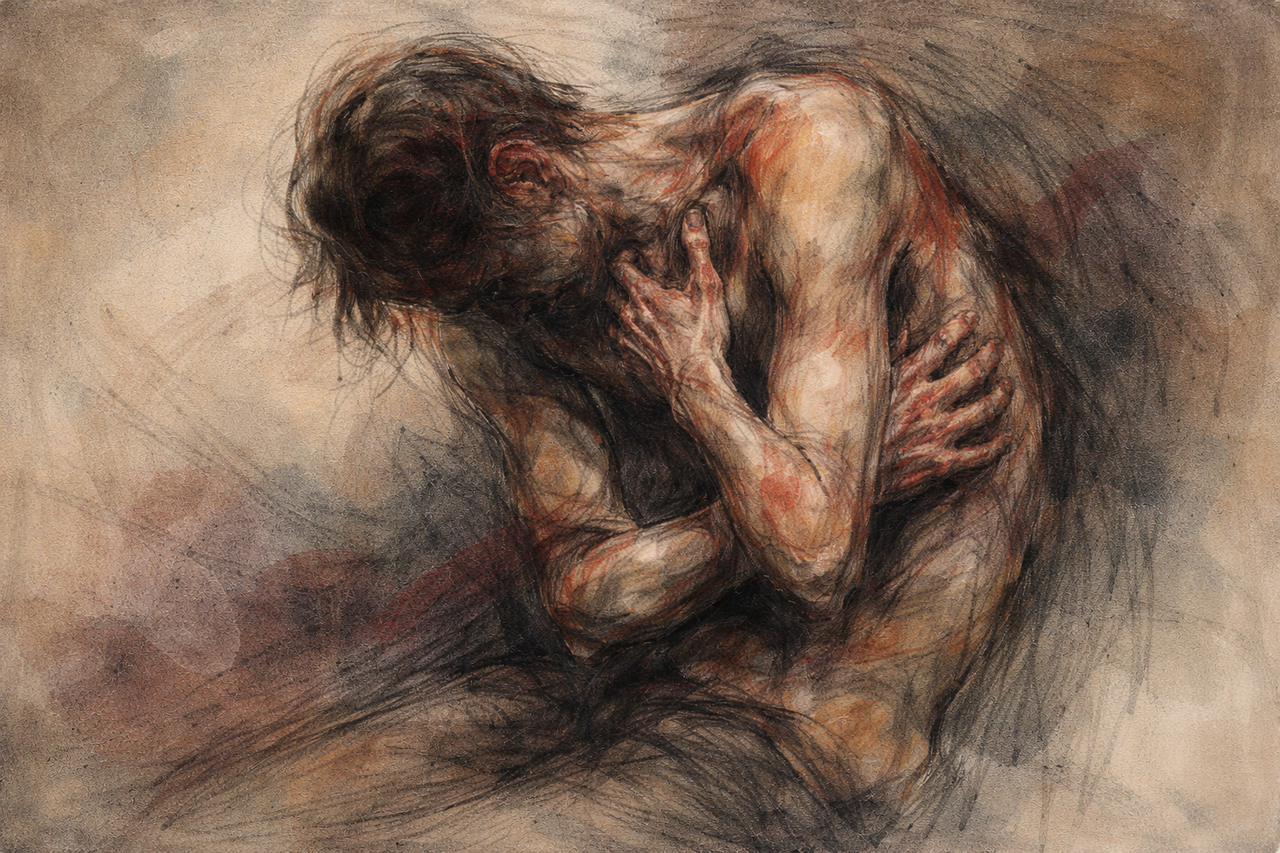
The Body Remembers
You are sitting in a meeting when your manager's tone shifts, becoming slightly sharp, though the words remain neutral.
Your heart rate increases immediately. Your shoulders tense. Your breathing becomes shallow. This happens before conscious thought registers what is occurring. You find yourself agreeing to unreasonable demands, your voice quieter than intended, your posture subtly shrinking. Only afterwards, replaying the conversation, do you recognise what happened: your body reacted to threat that your mind did not consciously perceive.
This bodily response is not weakness but evolutionary inheritance. For millions of years, organisms survived by detecting and responding to threats faster than conscious deliberation allows. The nervous system evolved to act first, think later. A rustle in grass might be wind or predator; waiting to determine which could mean death. Bodies that hesitated were eliminated; bodies that reacted survived.
Modern threats rarely involve physical predators, yet the nervous system responds identically. Authority's disapproval, economic precarity, social exclusion all trigger ancient survival mechanisms designed for immediate physical danger. This creates vulnerability to control: systems need not convince minds when they can activate bodies' automatic responses to threat.
This chapter examines how the body stores memory independent of conscious recall, why trauma creates physiological patterns enabling control, what neuroscience reveals about somatic intelligence, how chronic stress rewires nervous systems towards compliance, and why embodied awareness represents crucial resistance to systems operating through physiological manipulation.
The neuroscience of embodied memory
Memory is not solely cognitive phenomenon stored in brain but distributed throughout body. The nervous system, endocrine system, immune system, and musculature all encode experiences, creating memories that influence behaviour without conscious awareness.
Traumatic experiences are stored differently than ordinary memories. Trauma activates primitive brain regions whilst inhibiting areas responsible for language and conscious processing. This creates memories that are felt rather than narrated, experienced somatically rather than recalled cognitively.
Two distinct memory systems operate in parallel. Explicit memory, processed by hippocampus and accessible to consciousness, stores facts and events. Implicit memory, processed by amygdala and basal ganglia, stores emotional and procedural information operating outside awareness. Traumatic experiences often bypass explicit memory whilst creating powerful implicit memories manifesting as bodily sensations, emotional states, and automatic behaviours.
Traumatic stress affects brain structure measurably. Chronic stress shrinks hippocampus whilst enlarging amygdala. This creates neurological bias towards perceiving threat and difficulty forming coherent narratives about experiences. The result is somatic memory disconnected from understanding: people know something happened through bodily sensation but cannot articulate what or why.
Bodies guide decision-making before conscious deliberation through what neuroscience calls "somatic markers." When people encounter risky choices, physiological responses predict which options they will avoid before they consciously recognise danger. The body "knows" through pattern recognition operating faster than thought.
This creates double-edged phenomenon. Somatic intelligence enables rapid threat detection protecting from genuine danger. But it also makes people vulnerable to manipulation through triggering physiological responses that bypass rational evaluation. Authority can control behaviour by activating bodily states associated with compliance without requiring intellectual persuasion.
Interoception, the perception of internal bodily states, varies significantly between individuals. People with high interoceptive awareness accurately detect heartbeat, breathing patterns, and emotional states. Those with low interoceptive awareness remain largely unconscious of bodily signals. Studies find that interoceptive ability correlates with emotional regulation, decision-making quality, and resistance to social pressure.
Polyvagal theory and social engagement
Polyvagal theory revolutionised understanding of how nervous system states affect behaviour and social connection. The theory identifies three neural circuits governing responses to environment: social engagement, fight-or-flight, and shutdown.
The ventral vagal system, most recently evolved, supports social engagement when safety is perceived. This state enables connection, communication, and creative thinking. Facial muscles are mobile, voice has prosodic range, heart rate variability is high. This is state supporting complex social behaviour and learning.
When threat is detected, the sympathetic nervous system activates fight-or-flight responses: increased heart rate, cortisol release, muscle tension, heightened alertness. This state mobilises energy for confrontation or escape but impairs higher cognitive functions. Social engagement becomes difficult as system prioritises survival over connection.
If threat is overwhelming or escape impossible, the dorsal vagal system activates shutdown responses: decreased heart rate, numbing, dissociation, immobilisation. This primitive survival strategy conserves energy when active response seems futile. People describe feeling frozen, unable to speak or move despite wanting to act.
Chronic stress keeps many people oscillating between sympathetic activation and dorsal shutdown, rarely accessing ventral vagal social engagement. This creates populations physiologically unable to connect meaningfully, think clearly, or resist collectively. They are stuck in survival states that prioritise immediate threat response over complex social coordination.
Institutions exploit these states systematically. Workplaces maintain sympathetic activation through deadlines, performance anxiety, and job insecurity, keeping workers mobilised but too stressed for critical thinking or collective organising. Authoritarian systems use overwhelming force triggering dorsal shutdown, creating passive populations too numbed to resist.
This explains why rational argument often fails to change behaviour. When people operate from sympathetic or dorsal states, they cannot access neural circuits supporting reflection and perspective-taking. The body must feel safe before the mind can think freely. This makes physiological state regulation politically significant: populations in chronic stress cannot organise effectively.
Trauma and political control
Unresolved threat responses become encoded in nervous system, creating chronic states of hypervigilance or collapse. This makes traumatised populations easier to control because their nervous systems are already primed for threat detection and compliance.
When organisms complete natural threat responses through fight, flight, or successful escape, nervous system returns to baseline. Trauma occurs when responses cannot complete: captive animals that cannot flee, people in situations where fighting back brings worse consequences, children dependent on abusive caregivers. The incomplete response remains physiologically active, creating lasting changes in stress reactivity.
Trauma produces measurable physiological changes: elevated baseline cortisol, exaggerated startle response, difficulty returning to calm after stress, chronic muscle tension, and altered immune function. These changes persist long after original threat ends, making traumatised individuals experience world as perpetually dangerous even when objectively safe.
Populations exposed to chronic uncertainty, violence, or economic precarity develop collective trauma responses. Communities experiencing war, poverty, or systematic oppression show elevated rates of stress-related illness, interpersonal conflict, and difficulty trusting others. These are not individual pathologies but adaptive responses to genuinely threatening environments.
This creates political vulnerability. When populations operate from trauma states, they seek safety through submission to authority promising protection. People experiencing chronic stress show increased support for authoritarian leaders, reduced tolerance for ambiguity, and greater willingness to surrender freedoms in exchange for security.
Prolonged captivity produces specific syndrome: learned helplessness, identification with abuser, difficulty imagining alternatives, and distorted self-concept. These symptoms appear in domestic abuse survivors, prisoners of war, and populations under authoritarian regimes. The body learns that resistance brings punishment, compliance brings relative safety.
Economic systems exploit trauma responses through manufactured precarity. Job insecurity produces physiological stress comparable to unemployment itself. Maintaining populations in constant anxiety about survival keeps nervous systems activated, impairing higher cognitive functions and collective organising capacity.
Chronic stress and compliance
Chronic activation of stress responses produces widespread physiological damage whilst impairing cognitive function. Research with primates shows that subordinate animals in hierarchies exhibit chronic stress, leading to impaired immune function, cardiovascular problems, and reduced neurogenesis.
Human hierarchies produce similar effects. Lower status correlates with worse health outcomes, even controlling for material resources. The chronic stress of subordination produces measurable physiological damage. This is not individual variation but systemic pattern where hierarchy itself creates illness.
Chronic stress impairs prefrontal cortex function, the brain region supporting complex reasoning, planning, and impulse control. People experiencing chronic stress show reduced working memory, impaired decision-making, and difficulty maintaining attention. This creates population less capable of critical thinking necessary for challenging power structures.
Allostatic load, the cumulative wear and tear of chronic stress, damages multiple bodily systems simultaneously. Cardiovascular disease, metabolic syndrome, immune dysfunction, and premature ageing all correlate with chronic stress exposure. The body literally breaks down under sustained threat.
This creates vicious cycle: stress impairs health, poor health reduces economic opportunity, reduced opportunity increases stress. Childhood poverty produces lasting physiological changes affecting health throughout life. The body remembers early deprivation, maintaining stress responses long after material conditions improve.
Modern work intensifies chronic stress through perpetual availability enabled by technology. Inability to disconnect from work produces elevated evening cortisol, disrupted sleep, and impaired recovery. The body never fully relaxes, maintaining low-grade stress activation that accumulates across years.
Perceiving stress as harmful versus enhancing affects physiological responses. People viewing stress as challenge rather than threat show different cardiovascular patterns and better outcomes. Yet this individualises structural problems: telling stressed people to reframe stress addresses symptoms whilst ignoring systems creating chronic stress.
Embodied cognition and somatic intelligence
Thinking is not purely mental process but fundamentally embodied. Abstract concepts are understood through bodily metaphors: understanding is grasping, time flows, moods rise and fall. This is not poetic language but how cognition actually operates.
Bodily states affect thinking measurably. Holding warm versus cold drinks affects judgements of others' warmth. Standing in expansive versus contracted postures affects confidence and risk-taking. Facial expressions affect emotional experience: forcing smile increases positive mood, forcing frown increases negative mood.
This bidirectional influence means that thoughts affect body, but body equally affects thoughts. Consciousness itself emerges from body's self-regulation. We think because we are bodies maintaining themselves in environments, not despite having bodies. Mind is not separate from but constituted by embodiment.
People who accurately perceive bodily signals make better decisions, regulate emotions more effectively, and show greater empathy. Body-aware individuals resist social pressure more successfully, suggesting interoception supports autonomy.
Body is not object we possess but subject we are. Perception occurs through bodily engagement with world, not through mind observing body from distance. This perspective recognises that bodies are not vehicles for consciousness but its very ground.
The gut-brain connection reveals extensive communication between digestive and central nervous systems. The gut contains more neurons than spinal cord and produces 90% of body's serotonin. Gut microbiome affects mood, anxiety, and even social behaviour, demonstrating that cognition extends beyond brain into entire organism.
This challenges mind-body dualism underlying much Western thought. Bodies are not mere containers for minds but intelligent systems integrating information from environment and generating responses guiding behaviour. Somatic intelligence operates largely outside conscious awareness but profoundly influences perception, emotion, and action.
Somatic practices and embodied resistance
If bodies store trauma and chronic stress patterns enabling control, somatic practices offer pathway to resistance through restoring physiological regulation and interoceptive awareness. These practices do not require mysticism but draw on neuroscience showing that deliberate attention to bodily sensation affects nervous system functioning.
Meditation shows measurable effects on brain structure and stress responses. Long-term meditators show increased grey matter density in regions supporting attention, emotional regulation, and interoception. Meditation increases vagal tone, supporting social engagement system and reducing reactivity to stress.
Mindfulness-Based Stress Reduction demonstrates clinical effectiveness for reducing anxiety, depression, and chronic pain. The eight-week programme changes brain activity patterns, reducing amygdala reactivity whilst increasing prefrontal cortex activation. These changes persist beyond meditation sessions, affecting daily stress responses.
Somatic Experiencing helps traumatised individuals complete interrupted threat responses through gentle body awareness. Rather than talking about trauma, practitioners guide attention to bodily sensations, allowing incomplete fight-or-flight responses to discharge safely. This approach effectively treats PTSD and complex trauma.
Yoga and tai chi demonstrate benefits beyond physical exercise. These practices improve heart rate variability (marker of nervous system health), reduce inflammation, decrease cortisol, and improve emotional regulation. The combination of movement, breath awareness, and present-moment attention affects multiple physiological systems simultaneously.
Breathing techniques show remarkable control over nervous system states through simple practices. Slow breathing activates parasympathetic nervous system, promoting calm. Box breathing (equal length inhale-hold-exhale-hold) reduces anxiety and improves focus. These techniques demonstrate that deliberate attention to automatic processes can shift physiological states rapidly.
Dance and movement therapies use embodied expression to process emotion and trauma. Movement activates neural networks differently than talk therapy, accessing emotional material stored somatically. Expressing through body what cannot be verbalised provides alternative pathway to integration and healing.
These practices share common mechanism: bringing conscious awareness to bodily experience. This interrupts automatic patterns, creates space between stimulus and response, and restores agency over physiological states. The body that unconsciously obeys can learn conscious self-regulation, becoming ally rather than vulnerability in resisting control.
The body politic and collective trauma
Trauma is not only individual phenomenon but collective experience affecting entire populations. Historical trauma, intergenerational trauma, and systematic oppression produce shared physiological patterns that shape communities across generations.
Offspring of trauma survivors exhibit altered stress responses even without direct exposure to traumatic events. Holocaust survivors' children and grandchildren show elevated cortisol responses, higher anxiety rates, and altered gene expression related to stress regulation. Trauma affects biology in ways transmitted across generations.
Epigenetic mechanisms explain this intergenerational transmission. Severe stress alters gene methylation patterns affecting stress response systems. These epigenetic marks can be inherited, meaning parental trauma affects children's physiological reactivity. This is not genetic determinism but demonstrates environmental experience affecting biology across generations.
Indigenous communities show lasting physiological effects of colonisation, forced relocation, and cultural genocide. Elevated rates of diabetes, cardiovascular disease, substance abuse, and suicide among indigenous populations globally are not cultural failures but somatic responses to systematic trauma continuing across generations.
African American communities experience collective trauma through historical slavery, Jim Crow, and ongoing racism. Experiences of discrimination produce measurable physiological stress, contributing to health disparities. The chronic vigilance required in racist societies creates wear and tear on bodies that accumulates across lifetimes.
Racist experiences produce symptoms identical to PTSD: hypervigilance, intrusive thoughts, avoidance, emotional numbing. These are not individual pathologies but normative responses to chronic exposure to dehumanisation and threat. The body remembers racist encounters even when mind attempts to move forward.
War, famine, and displacement create collective trauma affecting entire nations. Populations exposed to mass violence show elevated rates of anxiety, depression, and stress-related illness persisting decades after conflicts end. Collective nervous systems remain activated, affecting social trust and capacity for cooperation.
Healing collective trauma requires more than individual therapy. Communities need safe spaces for collective processing, acknowledgement of historical harms, and structural changes addressing ongoing sources of trauma. Truth and reconciliation processes, community rituals, and cultural revival can support collective healing when combined with material justice.
Connection to previous chapters
The body represents the material substrate upon which all previous mechanisms operate. Every form of control ultimately affects nervous system states, creating physiological patterns enabling or resisting manipulation.
Consciousness (Chapter 2): Consciousness emerges from embodied processes. Awareness depends on interoception, the perception of bodily states. The burden of consciousness includes managing physiological reactivity that operates faster than thought.
Masks (Chapter 3): Social performance requires bodily discipline: controlling facial expressions, moderating vocal tone, managing posture. The body stores tensions from performed roles, creating somatic signatures of inauthenticity.
Crowds (Chapter 4): Crowd formation depends on emotional contagion transmitted through bodies: shared movements, synchronised breathing, physiological arousal spreading through proximity. Bodies in crowds operate through nervous system coordination.
Indoctrination (Chapter 5): Ideological training affects bodies through conditioning emotional and physiological responses to symbols and narratives. Successful indoctrination creates automatic bodily reactions to ideological content.
Early belief systems (Chapter 6): Religious practices shape bodies through ritual: repetitive movements, controlled breathing, fasting, prayer postures. Religious experience is fundamentally embodied, not purely cognitive.
Capitalism (Chapter 7): Economic systems extract labour from bodies whilst creating chronic stress through precarity and overwork. The physiological toll of capitalism appears in stress-related illness, exhaustion, and premature ageing.
Hypernormalisation (Chapter 8): Living within contradictory systems creates physiological dissonance. The body knows something is wrong even when mind accepts official narratives, producing chronic low-grade stress from unresolved cognitive-somatic conflict.
Control without violence (Chapter 9): Disciplinary power operates through training bodies into automatic compliance. Foucauldian docile bodies are not just metaphor but physiological reality of internalised control affecting nervous system patterns.
Identity as weapon (Chapter 10): Identity categories are embodied through performance but also through physiological responses to perceived in-groups and out-groups. Social categorisation affects stress responses and empathic resonance.
Mental health (Chapter 11): Mental health problems are fundamentally embodied phenomena involving disrupted nervous system regulation. Anxiety, depression, and trauma manifest somatically before being categorised cognitively.
Education (Chapter 12): Schools discipline bodies through requiring stillness, controlling movement, and suppressing natural rhythms. The body learns compliance through physical regulation more than through intellectual persuasion.
Radicalisation (Chapter 13): Extremist groups provide belonging that feels safe to traumatised nervous systems seeking certainty. The physiological relief of finding community after isolation makes ideological content secondary to somatic experience.
Individuality (Chapter 14): Independent thought requires physiological capacity to tolerate discomfort of social pressure. Chronic stress impairs prefrontal function necessary for resisting conformity.
Secular sacred (Chapter 15): The body itself is sacred as locus of conscious experience. Suffering matters because it is felt in bodies. Ethics grounds in embodied capacity for pain and pleasure.
Algorithmic mind (Chapter 16): Digital platforms exploit bodily responses through engineering dopamine hits, variable rewards, and physiological arousal. Addiction operates through nervous system conditioning.
Economy of attention (Chapter 17): Fragmented attention produces physiological stress through constant vigilance and incomplete tasks. The body cannot relax when attention perpetually divides.
Story controls mind (Chapter 18): Narratives affect bodies through emotional responses preceding rational analysis. Compelling stories activate physiological states making their claims feel true before critical evaluation occurs.
Conclusion: returning to the body
This chapter has documented how bodies store memory independent of conscious recall, why trauma creates physiological patterns enabling control, what neuroscience reveals about somatic intelligence, how chronic stress rewires nervous systems towards compliance, and why embodied awareness represents crucial resistance.
The research presented demonstrates that memory is not solely cognitive but distributed throughout body. Traumatic experiences bypass conscious processing whilst creating powerful implicit memories manifesting somatically. Bodies guide decisions before conscious deliberation through pattern recognition operating faster than thought.
Polyvagal theory explains how nervous system states affect social behaviour and cognition. Chronic stress keeps populations oscillating between sympathetic activation and dorsal shutdown, rarely accessing ventral vagal social engagement necessary for complex thinking and collective organising. This makes physiological state regulation politically significant.
Trauma research reveals that unresolved threat responses create lasting changes in stress reactivity. Traumatised populations experience world as perpetually dangerous, making them seek safety through submission to authority. Political systems exploit this vulnerability by maintaining chronic uncertainty producing physiological stress patterns favouring compliance.
Chronic stress produces measurable damage whilst impairing cognitive function necessary for critical thinking. Sustained stress impairs prefrontal cortex, the region supporting complex reasoning required for challenging power structures. This creates vicious cycle where stress reduces capacity to address systems creating stress.
Embodied cognition research demonstrates that thinking is fundamentally bodily process. Abstract concepts are understood through somatic metaphors. Bodily states affect judgements. Interoceptive awareness correlates with better decision-making and greater autonomy. This reveals that bodies are not mere vehicles for minds but intelligent systems constituting cognition itself.
Somatic practices offer pathway to resistance through restoring physiological regulation. Meditation, somatic experiencing, yoga, and breathing techniques all demonstrate that deliberate attention to bodily sensation affects nervous system functioning measurably. These practices interrupt automatic patterns, creating space between stimulus and response where choice resides.
Collective trauma affects entire populations across generations through epigenetic transmission and shared physiological patterns. Indigenous communities, African Americans, war survivors all carry collective nervous system activation affecting health, social trust, and capacity for cooperation. Healing requires acknowledging historical harms and addressing ongoing structural violence.
The opening scenario of automatic submission in meeting illustrates embodied control operating practically. The body reacted to tonal shift before conscious awareness registered threat. This demonstrates that systems need not convince minds when they can activate bodies' automatic responses, making physiological manipulation particularly effective form of control.
What makes embodied control especially effective is its invisibility to conscious awareness. People experience physiological responses as natural reactions rather than conditioned patterns susceptible to change. Compliance feels automatic, not chosen, making resistance seem impossible when actually it requires developing somatic awareness.
The chapter argues that bodies remember what minds forget, storing experiences as physiological patterns affecting behaviour outside awareness. This makes bodies both vulnerability and resource: vulnerability when unconsciously manipulated, resource when consciously inhabited.
Reclaiming embodied autonomy requires developing interoceptive awareness through practices directing attention to sensation. This is not escape from rationality but its foundation. Without physiological regulation, complex thinking becomes impossible. Chronic stress impairs precisely the cognitive capacities necessary for resistance.
The secular sacred framework identifies consciousness as sacred because it can suffer. Suffering is embodied experience, not abstract concept. Ethics grounds in recognition that conscious beings feel pain and pleasure through bodies. Protecting bodies from unnecessary suffering becomes fundamental ethical commitment.
This chapter reveals that all previous mechanisms ultimately operate through bodies. Consciousness emerges from embodied processes. Identity performs through bodily discipline. Indoctrination conditions physiological responses. Economic systems extract labour whilst creating chronic stress. Algorithms exploit dopamine systems. Attention fragments through sympathetic activation. Language affects bodies through emotional arousal.
Whether individuals and societies can develop embodied resistance whilst systems engineer physiological compliance remains uncertain. The forces promoting chronic stress, trauma, and disconnection from bodily awareness are powerful and largely invisible. Yet neuroscience demonstrates that awareness itself changes nervous system functioning.
In world where control operates increasingly through physiological manipulation, returning to the body represents crucial resistance. Not through rejecting embodiment for pure thought but through inhabiting bodies consciously, developing interoceptive awareness, and practising self-regulation that restores agency over automatic responses.
The body remembers trauma, stress, and compliance patterns encoded neurologically. But the body also remembers safety, pleasure, and autonomy. Through deliberate attention to sensation, incomplete threat responses can discharge, chronic patterns can soften, and physiological states supporting clear thinking and collective action can be cultivated.
Freedom begins not in overthrowing systems but in inhabiting ourselves fully. The body that unconsciously obeys can learn conscious self-regulation. This does not guarantee political transformation but provides necessary foundation: populations in chronic stress cannot organise effectively, whilst communities cultivating collective nervous system regulation access capacities for sustained resistance.
Awareness through sensation returns perception to immediate experience, interrupting conditioning, and restoring space where choice becomes possible. This is quiet revolution occurring privately before manifesting publicly. The body, once recognised as intelligent ally rather than unconscious mechanism, becomes doorway back to autonomy, presence, and the possibility of genuine freedom.
End of Chapter 19