As I See It
Vayu Putra
Chapter 5
Indoctrination
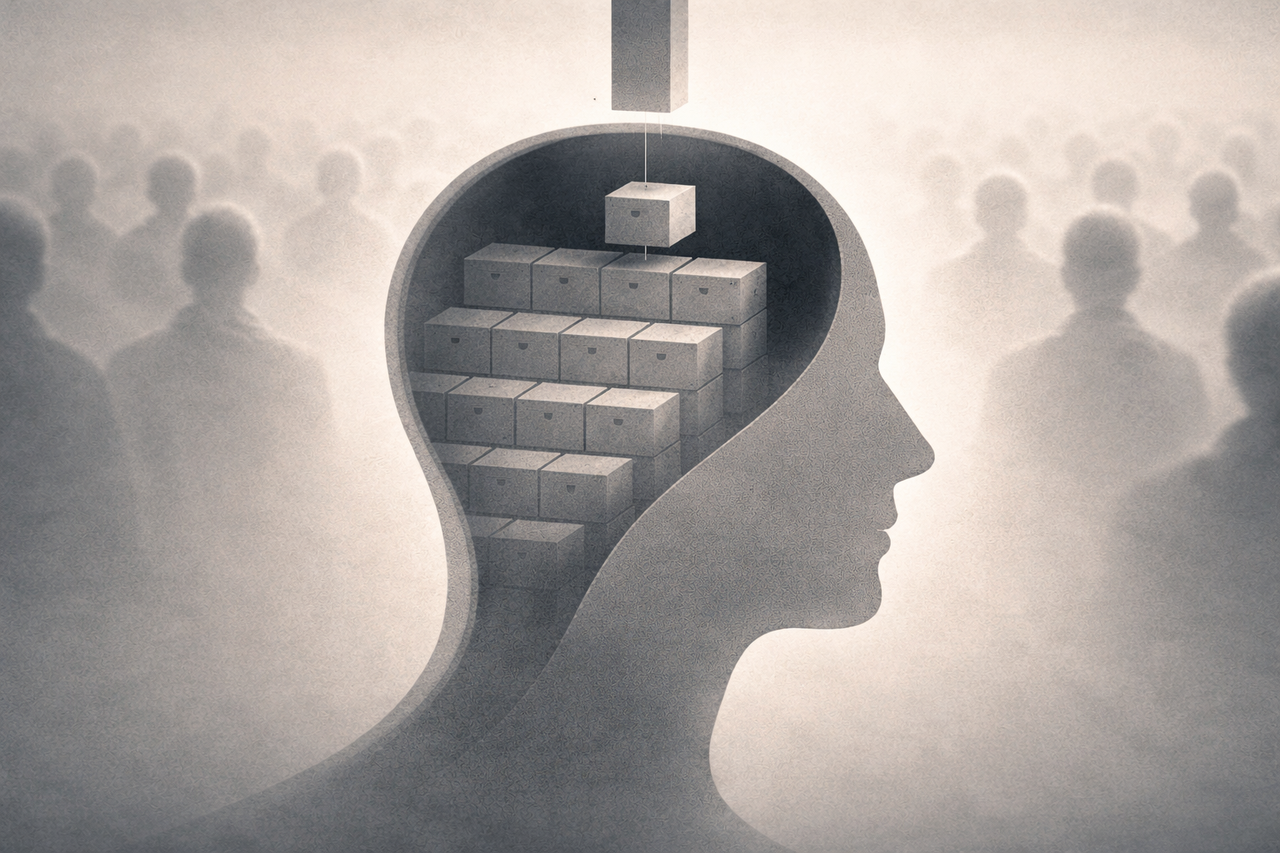
Indoctrination is not the act of teaching ideas.
It is the act of teaching ideas without teaching how to question them.
This distinction matters profoundly. Education introduces tools for thinking, frameworks for analysis, and methods for evaluating claims. Indoctrination installs conclusions as if they were axioms, presents beliefs as if they were facts, and treats questioning as if it were betrayal. One expands the realm of possibility. The other systematically closes it.
Most people imagine indoctrination as something dramatic and visible. They picture chanting crowds in authoritarian regimes, children in extremist training camps, or cult members surrendering their autonomy to charismatic leaders. These examples exist, certainly. But they represent the obvious extreme of a mechanism that operates far more commonly in quieter, more gradual, and more socially accepted forms.
In reality, indoctrination is usually disguised as normal upbringing, standard education, cultural transmission, or simple common sense. It happens in homes and schools and places of worship. It happens through media consumption and peer pressure and institutional socialisation. It happens so gradually that the person being indoctrinated rarely notices the process whilst it is occurring.
By the time indoctrination becomes visible, by the time someone can look back and recognise what happened to them, it has already done its primary work. The beliefs are installed. The neural pathways are established. The identity is formed. The worldview is in place.
And the person experiencing all of this typically does not feel controlled or manipulated. They feel certain. They feel they have simply recognised truth that was always there.
This is why indoctrination is so extraordinarily effective. And why understanding it is essential for anyone attempting to think clearly about belief, identity, and social control.
What indoctrination actually is
Indoctrination does not announce itself. It does not begin by saying "I am now going to install beliefs in you that you will not be able to question." It does not present itself as a programme of mental conditioning designed to produce specific outcomes.
Instead, it begins by saying "This is simply how things are." It presents ideas as natural, obvious, self-evident, and unquestionable. It frames alternatives not as different perspectives worthy of consideration, but as dangerous, immoral, foolish, or literally unthinkable. Over time, through mechanisms we will explore in detail, the individual stops being able to distinguish between belief and reality.
Robert Jay Lifton, in his groundbreaking 1961 study "Thought Reform and the Psychology of Totalism," identified what he called "thought-terminating clichés" as a central feature of indoctrination. These are phrases that end inquiry rather than encouraging it. "God works in mysterious ways." "It is what it is." "That is just how things are." "You would not understand." "You must have faith." Each of these statements functions to close down questioning at precisely the moment when questioning would be most valuable.
A belief absorbed through indoctrination does not feel learned in the way that algebra or history feels learned. It does not carry the quality of information that was externally acquired and internally processed. Instead, it feels discovered. It feels like recognising something that was always true, like common sense finally articulated, like seeing clearly for the first time.
This subjective experience is crucial to how indoctrination functions. The person does not feel that beliefs have been imposed upon them. They feel that they have arrived at truth through their own understanding. This perception makes the beliefs extraordinarily resistant to challenge, because challenging them feels like challenging reality itself rather than challenging someone else's claim.
The psychologist Kathleen Taylor, in her 2004 work "Brainwashing: The Science of Thought Control," describes indoctrination as a process that "restricts the range of ideas to which people are exposed whilst simultaneously increasing their commitment to a narrow set of beliefs." The restriction happens first, often before the person has developed the cognitive tools to recognise that restriction is occurring. The commitment follows, built through mechanisms that feel natural and voluntary even when they are carefully engineered.
What makes indoctrination distinct from education is not whether ideas are taught with conviction. Teachers can be passionate about mathematics or history whilst still teaching students how to think mathematically or historically. What makes indoctrination distinct is the systematic elimination of tools for independent evaluation. Education says "here is how to think about this domain." Indoctrination says "here is what to think, and questioning demonstrates moral failure."
This difference is structural, not superficial. And recognising it requires understanding how beliefs actually form in human minds, particularly in developing minds that have not yet acquired the capacity for meta-cognitive reflection.
When learning stops
A simple diagnostic test can distinguish education from indoctrination, though applying it requires honesty that many systems discourage.
Education allows you to ask why. It encourages questions. It treats doubt as a valuable part of the learning process. It acknowledges that understanding deepens through challenge and that beliefs that cannot withstand scrutiny are not worth holding.
Indoctrination tells you that certain questions are dangerous, disrespectful, or indicative of moral failing. It frames doubt as weakness or sin or betrayal. It treats questioning foundations not as intellectual curiosity but as a character flaw requiring correction.
The moment a system discourages questioning its own foundational assumptions, learning in any meaningful sense has ended. What remains is repetition, enforcement, and defence. Knowledge acquisition becomes impossible because knowledge requires the capacity to revise beliefs in light of new information. If revision is forbidden, if certain beliefs are placed beyond interrogation, then the system is no longer educational. It is indoctrinational.
Children are particularly vulnerable to this process, and understanding why requires looking at developmental psychology. Jean Piaget's research on cognitive development, refined by subsequent researchers, demonstrates that children move through distinct stages of reasoning capacity. Young children, roughly before age seven or eight, do not possess the cognitive tools for abstract reasoning or for distinguishing between authority's claims and reality itself.
A young child told that God created the world, or that their nation is inherently superior, or that certain people are dangerous, does not evaluate these claims against evidence. The child absorbs them as facts about reality, in exactly the same way they absorb that fire is hot or that falling hurts. The claims are not subjected to scrutiny because the cognitive apparatus for scrutiny has not yet developed.
This is not failure on the child's part. It is how development works. Children must trust caregivers to survive. That trust necessarily extends beyond immediate physical care into language acquisition, value formation, moral reasoning, and worldview construction. The developing brain cannot afford scepticism towards primary caregivers. It would be adaptively disastrous.
A child who constantly questioned whether food was actually food, or whether caregivers actually had the child's interests in mind, would not survive long enough to reproduce. So the brain is wired to accept, to trust, to absorb what trusted authorities present as true. This is essential for development in stable, honest environments.
Indoctrination exploits this developmental necessity. It takes advantage of the period when the brain must accept claims uncritically to install beliefs that will later feel like foundational truths rather than acquired ideas. By the time the child develops the capacity for critical evaluation, the beliefs are already in place, already feel like common sense, already form part of identity.
This is why indoctrination is most effective when begun early. Not because young minds are easier to control in some sinister sense, but because they are developmentally designed to absorb the worldview of trusted caregivers without subjecting it to the kind of scrutiny that later reasoning would enable.
Repetition before reason
Ideas become powerful not primarily because they are true, logical, or supported by evidence. They become powerful because they are repeated. This is not a moral claim about which ideas deserve power. It is a neurological fact about how human brains process and retain information.
Repetition strengthens neural pathways. This is the basis of all learning, from language acquisition to motor skills to emotional associations. When a neural pattern is activated repeatedly, the connections between neurons involved in that pattern become more efficient. The brain literally rewires itself around repeated experiences.
What is repeated frequently feels familiar. What feels familiar activates less cognitive processing. And what activates less cognitive processing is interpreted by the brain as probably true. This is called processing fluency, and it operates largely below conscious awareness.
Daniel Kahneman, in "Thinking, Fast and Slow" (2011), describes this as a function of what he calls System 1 thinking: the fast, automatic, largely unconscious processing that handles most daily cognition. System 1 uses familiarity as a heuristic for truth. If something feels familiar, if processing it requires little effort, the brain defaults to treating it as probably accurate.
This happens long before conscious, deliberative reasoning engages. By the time System 2, the slower analytical thinking, gets involved, the feeling of truth is already established. System 2 can interrogate claims, but it has to overcome the initial impression created by familiarity, and that requires cognitive effort most people do not consistently invest.
When an idea is repeated daily, whether at home or in school or in places of worship or through media consumption, it stops feeling like a belief someone is asking you to accept. It starts feeling like reality itself, like a simple description of how things are.
This is why indoctrination rarely relies primarily on argument. Argument can be countered with argument. Evidence can be challenged with evidence. Logic can be questioned. But rhythm, ritual, routine, these operate below the level where argument happens. They create familiarity before reason is engaged.
Religious indoctrination uses prayer and ritual. Nationalist indoctrination uses pledge and anthem. Ideological indoctrination uses slogan and chant. Corporate indoctrination uses mission statement and culture exercises. The content varies, but the mechanism is identical: repeat the idea until it feels true independent of whether it is true.
Albert Bandura's social learning theory, developed through decades of research beginning in the 1960s, demonstrates that humans learn primarily through observation and imitation, not through explicit instruction. Children do not need to be told that their family's religious beliefs are correct. They absorb that those beliefs are correct by watching parents treat them as unquestionable, by participating in rituals that assume their truth, by being surrounded by a community that takes them for granted.
You do not debate a child into belief. You surround them with it. You make the belief so omnipresent that not believing would require active resistance against the entire social and informational environment. And most children, lacking both the cognitive tools for such resistance and the social power to maintain it, simply absorb what they are surrounded by.
By the time reason becomes available, by the time the child develops the capacity to evaluate claims independently, the beliefs are already embedded. They feel like discoveries, like recognitions of truth, not like ideas that were installed through environmental saturation before critical thinking was possible.
Authority as shortcut
Indoctrination always comes packaged with authority. This is not accidental. It is essential to how the mechanism functions.
Parents. Teachers. Religious leaders. Political figures. Elders. Institutions with cultural weight. Texts declared sacred or foundational. These authorities provide ready-made answers at precisely the moments when the individual feels uncertain, confused, or overwhelmed by complexity.
The brain welcomes this. Outsourcing cognitive labour reduces anxiety. Uncertainty is metabolically expensive. It requires holding multiple possibilities simultaneously, continuously evaluating new information, tolerating discomfort. Authority offers a shortcut: someone credible has already figured this out, so you can accept their conclusion and allocate cognitive resources elsewhere.
Stanley Milgram's famous obedience experiments, conducted at Yale in the early 1960s, demonstrated how powerfully humans defer to authority even when it conflicts with personal morality. Participants administered what they believed were dangerous electric shocks to strangers simply because a person in a lab coat, representing scientific authority, told them to continue. The experiments have been replicated across cultures with consistent results: humans are wired to defer to credible authority.
This deference is not pathological. It is adaptive. In stable societies with generally trustworthy institutions, deferring to expertise makes sense. You trust your doctor about medical issues not because you have personally verified every claim in medical textbooks, but because the system of medical training and credentialing is generally reliable.
Indoctrination exploits this adaptive tendency by presenting itself as the same kind of trustworthy authority whilst systematically eliminating the mechanisms that make legitimate expertise actually trustworthy: peer review, evidence requirements, open debate, provisional conclusions subject to revision.
Religious indoctrination presents scripture as authority that cannot be questioned. Nationalist indoctrination presents founding documents or historical narratives as sacred truth. Ideological indoctrination presents theoretical frameworks as scientific fact. In each case, authority is invoked to end inquiry rather than to guide it.
Over time, something insidious happens. Obedience to authority becomes confused with virtue itself. Not because people are naturally submissive, but because the brain learns through experience that agreement brings social reward whilst dissent brings social discomfort or punishment.
Leon Festinger's research on cognitive dissonance, first published in 1957, helps explain this process. When behaviour and belief conflict, the brain experiences psychological discomfort. To resolve this discomfort, people often adjust beliefs to match behaviour rather than vice versa. If you are repeatedly rewarded for obedience and punished for questioning, your brain eventually concludes that obedience is good and questioning is bad, not as a strategic choice but as a sincere belief.
Approval from authority feels good. It activates reward centres in the brain. Rejection or disapproval activates pain and threat responses. Over hundreds or thousands of interactions, the brain learns to anticipate what authorities want and to provide it automatically.
Eventually, the individual no longer needs to be explicitly told what to think. They have internalised the authority's perspective so thoroughly that they can generate the approved answer independently. They censor themselves before external censorship becomes necessary. They police their own thoughts to align with what authority requires.
At that point, indoctrination is functionally complete. The external authority has been internalised. The person now carries their own overseer, their own thought police, their own system of belief enforcement. And they experience this not as control but as moral clarity, as having simply learnt to recognise truth.
Identity lock-in
The most effective form of indoctrination does not merely teach beliefs. It ties those beliefs to identity so thoroughly that the two become inseparable.
You are not presented as someone who happens to believe certain things. You are defined as someone who is a certain thing. The belief becomes definitional to selfhood.
Religion accomplishes this through labels that function as identity categories. You are not someone who accepts Christian theological claims. You are a Christian. You are not someone who follows Islamic practice. You are a Muslim. The label shifts from descriptor to essence.
Nationality does this through flags, anthems, myths of origin, and narratives of exceptionalism. You are not someone who happens to live in a particular geographic location. You are British, American, Chinese, Nigerian. Your nationality defines something essential about who you are.
Political ideology does this through frameworks of moral superiority. You are not someone who holds certain policy preferences. You are progressive or conservative, and that label carries implications about your fundamental character, your moral worth, your capacity for correct thinking.
Once belief becomes identity, questioning the belief feels like questioning your own existence. This is not metaphorical. The brain processes threats to core identity as threats to survival. Neurologically, identity challenges activate the same systems that respond to physical danger.
Matthew Lieberman's research on social neuroscience, summarised in his 2013 book "Social: Why Our Brains Are Wired to Connect," demonstrates that social pain and physical pain activate overlapping neural networks. When identity is threatened, when belonging is questioned, the brain responds as if to physical injury.
To doubt an identity-linked belief is not experienced as reconsidering an idea. It is experienced as threatening who you are, where you belong, whether you are safe. The brain reacts accordingly, with fear, defensiveness, anger, and rationalisations designed to protect the belief regardless of evidence.
This is why indoctrinated beliefs often appear immune to evidence. The belief is not serving an epistemic function. It is not there to accurately describe reality. It is there to stabilise identity, maintain social belonging, and regulate psychological coherence.
Presenting evidence against such a belief does not create the conditions for rational reconsideration. It creates the conditions for defensive intensification. The person doubles down not because they are stupid or stubborn, but because their brain is treating the challenge as an attack requiring defence.
This phenomenon, sometimes called the backfire effect, has been documented in political psychology research. Brendan Nyhan and Jason Reifler's work shows that presenting people with corrections to factually incorrect beliefs can sometimes strengthen those beliefs if the beliefs are tied to identity. The correction is processed not as helpful information but as hostile attack.
Indoctrination systems understand this intuitively even if they do not articulate it explicitly. They bind belief to identity early and thoroughly. They make questioning feel like self-betrayal. They create communities where belonging depends on maintaining approved beliefs. They construct an architecture where leaving the belief system means losing everything: family relationships, social networks, moral framework, sense of meaning, and coherent identity.
Under these conditions, the question facing someone who begins to doubt is not "is this belief true?" It is "is truth worth losing everything?" And for many people, the honest answer is no. The cost of truth feels too high. So they maintain the belief, or perform belief maintenance even whilst harbouring private doubt, because the alternative is social and psychological devastation.
Indoctrination across systems
Religious indoctrination is not unique. It is simply older and more culturally recognised. But the same fundamental mechanisms appear across every domain where beliefs are installed without teaching tools for evaluation.
Nationalist indoctrination operates through school curricula that present national history as heroic narrative rather than complex reality. Through rituals like flag ceremonies and anthem singing that create emotional association with national symbols. Through framing of national identity as essential and allegiance as virtue. Children learn not just facts about their nation but that their nation is inherently good, that criticism is disloyalty, that the national interest justifies actions that would be condemned if taken by others.
Economic indoctrination presents particular economic systems as inevitable or natural rather than as contingent human constructions. Capitalism is not taught as one possible way of organising production and distribution with specific advantages and costs. It is presented as the natural order, as freedom itself, as the only viable system. Alternative arrangements are dismissed as utopian or totalitarian without serious examination. Students learn economic theory that assumes certain conclusions rather than methods for evaluating economic claims.
Corporate indoctrination happens through workplace cultures that frame loyalty to the organisation as personal virtue. Through mission statements repeated until they become internalised. Through performance reviews that reward cultural fit and penalise deviation. Through team-building exercises that create emotional bonds linking personal identity to corporate success. Employees learn that questioning company values is not independent thinking but bad attitude.
Political ideology indoctrinates through frameworks that sort all information into predetermined categories. Progressive or conservative, left or right, with us or against us. Through media ecosystems that confirm rather than challenge existing beliefs. Through social media algorithms that maximise engagement by showing people what they already agree with. Through partisan communities where belonging requires maintaining approved positions.
Each system uses the same core tools: repetition until familiarity creates the illusion of truth. Authority figures who model certainty and punish doubt. Identity fusion where belief becomes definitional to selfhood. Social structures where belonging depends on belief maintenance. Information control that limits exposure to alternatives. Emotional conditioning that associates agreement with positive feelings and disagreement with threat.
The content changes radically across these domains. A religious fundamentalist and a militant atheist, a nationalist and a cosmopolitan, a socialist and a libertarian would disagree about nearly everything. But the structure of how their beliefs were installed is often remarkably similar. They were taught what to think rather than how to think. They were surrounded by the belief until it felt natural. They were made to feel that the belief defines who they are.
People do not notice this because indoctrination feels normal from the inside. You rarely recognise it whilst you are inside it. The fish does not notice the water. You recognise indoctrination later, usually after leaving, when the silence around certain questions becomes deafening in retrospect.
What was not said becomes as revealing as what was. The questions that were never raised. The alternatives that were never presented. The doubts that were never acknowledged as legitimate. The whole architecture of information control becomes visible only from outside.
Why indoctrination survives intelligence
One of the most persistent misconceptions about indoctrination is that it primarily affects people of limited intelligence or education. This is false and, worse, it is a comfortable falsehood that makes intelligent people more vulnerable to indoctrination, not less.
Indoctrination does not target stupidity. It targets dependence. And everyone, regardless of intelligence, goes through developmental periods of dependence when beliefs are installed before critical thinking is possible.
Moreover, highly intelligent people are often more deeply indoctrinated than their less intelligent counterparts because intelligence provides superior tools for defending beliefs once they are in place. The smarter you are, the better you are at constructing rationalisations, finding supporting evidence whilst ignoring contradictions, and building elaborate intellectual structures on foundations that were never rationally established.
This is what psychologists call motivated reasoning. The brain is not primarily an engine for discovering truth. It is an engine for maintaining psychological coherence and social belonging. Intelligence makes the brain better at this task, not worse.
Dan Kahan's research on cultural cognition demonstrates that increased scientific literacy and numeracy do not make people more accurate in their beliefs. Instead, they make people better at interpreting information in ways that support their existing cultural commitments. Intelligent people are not more objective. They are more sophisticated in their subjectivity.
A person with high intelligence who was indoctrinated young does not escape indoctrination through intelligence. They use intelligence to defend indoctrinated beliefs more effectively. They find clever arguments. They master complex theological or ideological systems. They can debate for hours without ever questioning the foundational assumptions that were installed before reason was available.
This is why you find brilliant theologians defending doctrines that rest on no evidence. Why you find talented economists defending systems that empirically produce the outcomes the theories claim they prevent. Why you find thoughtful people maintaining beliefs that contradict their own stated values.
The intelligence is real. The thoughtfulness is real. But they are deployed in service of beliefs that were never rationally acquired. And the more intelligence is invested in defending such beliefs, the harder it becomes to abandon them. The person has now built their entire intellectual identity around the defence. Admitting the foundation was arbitrary would invalidate years or decades of intellectual work.
Indoctrination survives intelligence because it operates before critical thinking, not after it. By the time you are smart enough to question, the beliefs feel like truths you discovered rather than ideas someone installed. And intelligence then becomes the tool for defending those "truths" rather than examining them.
Education, similarly, does not automatically immunise against indoctrination. Education provides knowledge and skills within domains. But if the educational process itself was indoctrinational, if it taught approved answers rather than methods of inquiry, then more education simply means more sophisticated defence of indoctrinated positions.
You can have a PhD in theology without ever seriously questioning whether God exists. You can have a doctorate in economics without ever interrogating the moral assumptions underlying market theory. You can have advanced training in any field whilst remaining unable to think critically about the foundational beliefs of that field.
Breaking free from indoctrination requires not intelligence or education in the conventional sense. It requires something more specific: meta-cognitive awareness. The capacity to observe your own thinking. To notice when you are defending rather than evaluating. To recognise emotional reactions to challenges as signals that identity might be involved. To acknowledge that beliefs that feel certain might not be true.
This capacity can exist at any intelligence level. And it can be absent at any intelligence level. Indoctrination survives by operating below meta-cognition, by installing beliefs before awareness of belief-installation is possible. Intelligence helps defend against external challenge. Only meta-cognitive awareness helps defend against internal indoctrination.
The social architecture of belief maintenance
Indoctrination is not merely an individual psychological process. It is sustained through social structures that make belief maintenance easier than belief revision.
Solomon Asch's conformity experiments, first conducted in the 1950s, demonstrated that people will deny the evidence of their own senses to conform to group consensus. Participants shown a line and asked which of three comparison lines matched its length would frequently choose an obviously wrong answer if confederates in the experiment chose that answer first. The desire to conform, to avoid standing out, to maintain group harmony, proved stronger than the desire to be correct.
This tendency is not a bug in human psychology. It is a feature. For most of human evolutionary history, going along with the group was adaptive. Groups provided protection, resources, and mating opportunities. Individuals who maintained accurate beliefs but alienated the group often fared worse than individuals who maintained group-approved beliefs even when inaccurate.
Indoctrination systems exploit this by creating tight social structures where all relationships depend on belief maintenance. Religious communities make friendship, marriage prospects, business connections, and family approval contingent on continued faith. Political movements create echo chambers where all media consumption and social interaction reinforces approved positions. Corporate cultures make career advancement dependent on cultural alignment.
Under these conditions, changing beliefs means losing everything social. It means becoming isolated from everyone you know. It means starting over socially at an age when forming new relationships is difficult. It means explaining to family why you no longer share the values they raised you with. It means watching friendships dissolve because they were based on shared belief rather than mutual affection.
The brain does cost-benefit analysis, often unconsciously. And the cost of leaving indoctrinated beliefs frequently feels greater than the cost of maintaining them. This is especially true when the beliefs are not directly harmful to the person holding them. If your religious or political or economic beliefs do not obviously damage your life, if they provide community and meaning and structure, then what is the incentive to abandon them simply because they might not be true?
Truth is abstract. Belonging is immediate. For most people, most of the time, belonging wins.
This is why indoctrination includes mechanisms for isolating members from outside influence. Religious groups warn against "worldly" friendships. Political movements frame outsiders as enemies or dupes. Ideological communities treat engagement with opposing views as contamination.
The isolation serves multiple functions. It prevents exposure to information that might challenge beliefs. It makes leaving psychologically costly by ensuring no relationships survive exit. It creates informational dependency where the only sources of knowledge are internal to the system.
Robert Jay Lifton identified this as "milieu control" in his study of Chinese thought reform programmes. Control the information environment completely enough, and you control belief. Not through argument, but through elimination of alternatives. If you never encounter serious challenge to your beliefs, if everyone around you confirms those beliefs constantly, if dissent is invisible or presented only in straw-man form, then maintaining the beliefs requires no effort. They are simply the water you swim in.
Breaking this requires not just intellectual courage but social courage. It requires being willing to disappoint people you love. To damage relationships you value. To lose communities that have supported you. To face rejection and judgment. To exist in liminal space where you no longer belong to the old world but have not yet found a place in any new one.
Most people cannot do this. Not because they are cowards, but because humans are social animals for whom isolation is genuinely dangerous, not just emotionally but practically. We need social networks for economic opportunity, for psychological support, for identity validation, for meaning construction.
Indoctrination survives by making itself socially mandatory. The beliefs might be questionable. But the social cost of questioning them is not.
Developmental windows and missed alternatives
The timing of indoctrination matters enormously. Beliefs installed during childhood, before the development of formal operational thinking, have a quality of certainty that beliefs acquired later rarely achieve.
Jean Piaget's stages of cognitive development outline how children's thinking changes over time. Children in the concrete operational stage, roughly ages 7 to 11, can perform logical operations on concrete objects but struggle with abstract reasoning. They cannot yet think about thinking. They cannot evaluate the process by which they acquired beliefs.
This creates a developmental window during which beliefs can be installed as if they were perceptions of reality rather than interpretations. A child told that God watches everything they do experiences this as fact, not hypothesis. A child taught that their nation is inherently good experiences this as obvious truth, not contentious claim.
The same beliefs introduced in adolescence or adulthood would be subjected to greater scrutiny. The person would have comparative frameworks. They would have experienced belief revision in other domains. They would have the cognitive tools to ask "how do we know this?" and "what is the evidence?"
But beliefs installed in the developmental window before such tools exist carry a different psychological weight. They feel like foundations rather than conclusions. They feel like starting points for thought rather than results of thought.
This is why religious indoctrination typically focuses on childhood. Why nationalist education begins in primary school. Why political socialisation happens through family dinner conversation before children can articulate counter-arguments. The beliefs installed early become the lens through which all later information is filtered.
Moreover, childhood indoctrination creates path dependency. Once a child has internalised a religious worldview, all subsequent experience is interpreted through that framework. Prayer feels effective because you notice when wishes come true and forget when they do not. Scripture feels wise because you read it searching for wisdom. Community feels specially blessed because you are comparing from the inside.
The same mechanisms of motivated perception and confirmation bias that operate in adults operate more powerfully in children who have not yet developed meta-cognitive awareness of these biases. The child indoctrinated into Christianity literally experiences the world as confirming Christianity. The child indoctrinated into nationalism genuinely perceives their nation as superior.
These are not lies the child is telling. They are sincere perceptions shaped by the interpretive framework installed before interpretation was recognised as interpretation rather than observation.
The missed alternatives are equally important. A child raised in fundamentalist Christianity does not seriously encounter secular humanism as a viable alternative. A child raised in Chinese nationalism does not genuinely consider Tibetan perspectives. A child raised in capitalist ideology does not explore socialist alternatives as legitimate possibilities.
The belief system is presented as not one option among many but as the way things are. Alternatives are either invisible or presented in such distorted form that they appear obviously wrong. The child learns not just what to believe but what the available options are. And if legitimate alternatives never appear on the menu of possibilities, they cannot be chosen even if they would better fit the person's values or experiences.
This is information control at its most effective. Not suppressing information through force, but shaping the informational environment so thoroughly that alternatives never become psychologically real. You cannot choose what you have never genuinely encountered as a live possibility.
Breaking the spell: the psychology of deconversion
People often ask why indoctrinated individuals do not simply "wake up" and see that their beliefs are questionable. This question misunderstands the nature of the problem at every level.
Leaving indoctrination is not primarily an intellectual act. It is a social and emotional process that often resembles grief. Because it is grief. Grief for the worldview you are losing. Grief for the identity that is dissolving. Grief for the relationships that will change or end. Grief for time spent defending beliefs you now question.
Research on religious deconversion, summarised in work by Heinz Streib and others, shows that leaving tends to follow a pattern. It rarely happens through a single intellectual argument or piece of evidence. Instead, it happens through accumulated cracks in the system.
Small inconsistencies that do not get adequately resolved. Moral discomfort with teachings or behaviours that contradict stated values. Hypocrisy that becomes too obvious to rationalise. Lived experience that diverges too far from doctrinal claims. Emotional or intellectual needs that the system cannot address.
These cracks accumulate slowly, often over years. The person may defend the system publicly whilst privately harbouring growing doubt. They may attempt to reform the system from within before concluding reform is impossible. They may go through periods of intense recommitment, trying to recapture the certainty they remember.
Eventually, if the cracks become large enough, doubt becomes undeniable. But even then, leaving is not automatic. The person faces brutal questions that have no easy answers.
Is truth worth exile from family? Is intellectual honesty worth losing your entire social network? Is authenticity worth the identity crisis that comes from admitting your foundational beliefs were installed rather than discovered?
For many people, the answer is no. They continue performing belief, participating in rituals, maintaining appearances. They become what some researchers call "closeted doubters" or "secret sceptics," people who no longer believe but cannot afford to leave.
Others engage in compartmentalisation. They maintain religious identity whilst quietly adjusting what that means. They identify as Christian or Muslim or nationalist but reinterpret the terms in ways that let them keep the label whilst abandoning the content. This allows them to maintain social belonging whilst reducing cognitive dissonance.
A smaller number leave openly, accepting the costs. These individuals often describe the experience in terms of freedom and authenticity, but they also frequently describe it as traumatic. They use language of exile, loneliness, grief. They talk about feeling unmoored, lacking direction, unsure who they are.
This makes sense. Indoctrination does not just install beliefs. It provides identity, community, meaning, moral framework, and answers to fundamental questions about purpose and value. Leaving means losing all of that simultaneously. The freedom is real. But so is the loss.
Recovery from indoctrination typically requires building new frameworks for meaning, new social networks, new identity that is not defined by belief system. This takes time. It requires tolerating uncertainty whilst new certainties are constructed. It often involves therapy or support groups or mentorship from others who have made similar transitions.
The process unfolds in stages that researchers have attempted to map, though individual experiences vary considerably. Initial doubt often creates what Leon Festinger called cognitive dissonance, the psychological discomfort that arises when behaviours and beliefs conflict. The person may increase commitment temporarily, attempting to resolve discomfort by doubling down on beliefs rather than questioning them. This is why some individuals become more extreme just before leaving: they are fighting against doubts they cannot quite suppress.
Eventually, if the doubts persist and accumulate, a crisis point arrives. This might be triggered by a specific event: discovering that leaders lied about something significant, experiencing harm from the system that cannot be rationalised away, encountering undeniable evidence that contradicts core teachings, or simply reaching emotional exhaustion from maintaining beliefs that no longer feel tenable.
The crisis often feels like identity death. Everything the person understood about themselves, their purpose, their place in the universe, suddenly becomes questionable. This is not metaphorical death. The psychological experience can include the same grief stages as losing a loved one: denial, anger, bargaining, depression, and eventually acceptance.
During this period, individuals often describe feeling lost, unmoored, without direction or purpose. The indoctrinated belief system, despite its falsehoods, provided structure. It answered fundamental questions about meaning, morality, and identity. Losing it creates a void that must be filled with something, and the search for that something can be disorienting and frightening.
Some individuals replace one indoctrination with another, jumping from fundamentalist Christianity to militant atheism, from one political extreme to another, from corporate loyalty to anti-corporate activism. The content changes but the structure remains: absolute certainty, clear enemies, simple answers, strong community, and identity fusion with belief. This provides the psychological benefits of indoctrination without requiring the difficult work of learning to tolerate ambiguity.
Others enter what some researchers call the "wilderness period," a time of genuine uncertainty where old beliefs are abandoned but new ones are not yet formed. This period is uncomfortable but potentially valuable. It is the space where actual independent thinking becomes possible. Where questions can be asked without predetermined answers. Where beliefs can be examined rather than simply swapped.
Building new frameworks requires several parallel processes. Cognitively, individuals must develop critical thinking skills they may never have learned. They must practice evaluating evidence, identifying logical fallacies, distinguishing between claims and facts, and tolerating uncertainty when evidence is incomplete.
Emotionally, they must process grief for what was lost whilst building capacity for authentic rather than prescribed emotional experience. Many people leaving indoctrination realise they have never learned to identify their own emotions separate from what they were told to feel. Religious indoctrination often teaches that certain emotions are sinful, creating lifelong patterns of emotional suppression that require active work to overcome.
Socially, they must build new networks not based on shared belief but on genuine connection. This is particularly challenging for individuals whose entire social world existed within the indoctrinated community. Learning to form friendships based on mutual respect rather than doctrinal agreement, to maintain relationships across difference, to trust people who do not share their worldview, these are skills that indoctrination actively prevents developing.
Morally, they must construct ethical frameworks from first principles rather than accepting handed-down rules. This requires asking "what do I actually value?" rather than "what am I supposed to value?" It requires distinguishing between ethics derived from empathy and reason versus ethics derived from authority and punishment. It often involves confronting uncomfortable questions about past behaviour when indoctrinated beliefs led to harm of self or others.
The process is not simply becoming "deprogrammed" and returning to some neutral state. There is no neutral state. Human brains require frameworks for interpreting experience. The process is replacing one set of frameworks with another, ideally frameworks that are more flexible, more evidence-responsive, more conscious of their own provisional nature, and more respectful of autonomy.
Support during this transition proves crucial. Therapeutic approaches specifically designed for recovery from indoctrination, such as those developed by Marlene Winell and others, help individuals process trauma whilst building healthier frameworks. Support groups allow individuals to share experiences and realise they are not alone in the struggle. Mentorship from others who have successfully navigated similar transitions provides models for how to build life after indoctrination.
Literature and online communities have become particularly valuable resources. Reading accounts from others who left similar systems helps individuals feel less isolated. Online forums provide space to ask questions and explore doubts without immediate social consequences. Educational resources on critical thinking, logical reasoning, and cognitive biases help build intellectual tools that indoctrination withheld.
But the work remains difficult and ongoing. Years or decades of indoctrination cannot be undone quickly. The neural pathways built through repetition remain. The emotional conditioning persists. The identity associations continue to generate automatic reactions long after intellectual belief is abandoned.
Individuals often describe feeling "triggered" by religious music, political slogans, or ideological arguments years after leaving. The emotional response remains even when intellectual assent is withdrawn. This is normal. It is how brains work. Acknowledging these responses without being controlled by them becomes part of the ongoing work of recovery.
Doubt enters quietly. It is often unwelcome even to the person experiencing it. It creates anxiety and dissonance that the person may resist for years. But once doubt is genuinely allowed, once the questions are asked honestly without predetermined answers, indoctrination begins to weaken.
Not quickly. Not easily. But progressively. The spell breaks not all at once but piece by piece as the architecture becomes visible and the person recognises that what felt like discovering truth was often absorbing someone else's conclusions. As the realisation grows that certainty was manufactured rather than earned. As the understanding deepens that identity built on indoctrination is constructed rather than discovered.
The journey out of indoctrination is not a destination but an ongoing practice. It is learning to question rather than accept. To evaluate rather than assume. To build beliefs based on evidence and values rather than on authority and fear. To tolerate uncertainty rather than rushing to restore certainty. To respect others' autonomy whilst claiming your own.
This is harder than maintaining indoctrination. But it is more honest. And for many people who make this journey, honesty proves worth the cost.
Educational versus indoctrinational models
The contrast between education and indoctrination becomes clearer when we examine how they approach the same subject matter differently.
Religious education in an educational model would teach about world religions comparatively. It would present belief systems as human phenomena with historical development and cultural contexts. It would encourage students to understand why people believe what they believe without requiring students to adopt those beliefs. It would treat doubt and questioning as legitimate parts of religious exploration.
Religious indoctrination presents one religion as truth and others as false or incomplete. It requires participation in ritual. It treats questioning as moral failure. It ties religious identity to social belonging. It presents alternatives as dangerous or forbidden.
Political education in an educational model would teach political theory across the spectrum. It would present different systems of government and different ideological frameworks as responses to different values and circumstances. It would teach methods of policy analysis and evidence evaluation. It would encourage students to form their own positions based on explicit values and empirical claims they can defend.
Political indoctrination presents one ideology as correct and others as wrong or evil. It associates political belief with moral worth. It teaches approved conclusions rather than analytical methods. It creates emotional attachment to political identity that supersedes rational evaluation.
Economic education in an educational model would teach economic theories pluralistically. It would present capitalism, socialism, and mixed systems as analytical frameworks with different assumptions and different empirical predictions. It would teach students to evaluate economic claims and to recognise that economic systems serve different values differently.
Economic indoctrination presents one economic system as natural, inevitable, or morally required. It teaches simplified theory as if it were empirical description. It associates economic beliefs with personal identity. It treats alternatives as utopian or tyrannical without serious examination.
The structural differences are consistent. Education provides tools and encourages application. Indoctrination provides conclusions and discourages questioning. Education acknowledges uncertainty and complexity. Indoctrination demands certainty and simplicity. Education treats students as future autonomous thinkers. Indoctrination treats them as future members of a predetermined community.
Paulo Freire, in "Pedagogy of the Oppressed" (1970), distinguished between what he called banking education and problem-posing education. Banking education treats students as empty vessels into which information is deposited. Students receive, memorise, and repeat. The teacher is active, students are passive. Knowledge flows one direction.
Problem-posing education treats students as active participants in knowledge construction. It encourages questioning, dialogue, and critical thinking. It recognises that teachers and students learn from each other. It aims to develop autonomous thinking rather than compliant memorisation.
Indoctrination is an extreme form of banking education where the deposits are not just information but identity, where withdrawal is prohibited, and where questioning the bank is treated as theft.
Educational systems that genuinely respect autonomy prepare students to disagree with their teachers, to question textbooks, to revise beliefs in light of evidence, to tolerate uncertainty when evidence is ambiguous. They provide tools knowing that students might use those tools to reach different conclusions than teachers hold.
Indoctrinational systems cannot tolerate this. They need conformity. They need predictable outputs. They need new generations to carry forward the same beliefs. So they disguise indoctrination as education whilst systematically eliminating the features that make education valuable.
Recognising the difference requires attention to process, not just content. Any subject matter can be taught educationally or indoctrinationally. What matters is whether students are taught how to evaluate claims or simply told which claims to accept.
The long-term psychological effects
Indoctrination has psychological consequences that extend far beyond the specific beliefs installed. Research on individuals recovering from high-control religious groups, totalitarian movements, and other indoctrinational systems identifies consistent patterns of long-term effects.
Epistemic learned helplessness describes a condition where individuals lose confidence in their own capacity to evaluate truth claims. After years of being told that doubt is dangerous and that authority has all answers, people often struggle to trust their own judgment even after leaving. They may swap one authority for another rather than developing independent critical thinking. They know they were deceived but do not trust themselves to avoid deception in future.
Identity disruption occurs when the identity constructed through indoctrination is dismantled. If you spent decades as a devout Christian and then lost faith, who are you now? If you built your entire self-concept around being a loyal party member and then recognised the party's corruption, what remains? The psychological work of constructing new identity is substantial and often requires professional support.
Social isolation results from the loss of community that typically accompanies leaving indoctrinated beliefs. The isolation is not just emotional but practical. Business connections, housing arrangements, childcare networks, all of these may be embedded in the belief community. Leaving means rebuilding entire life infrastructure.
Moral disorientation happens when the moral framework provided by indoctrination is abandoned but not yet replaced. The person may intellectually reject religious ethics whilst emotionally still experiencing religiously-based guilt. They may recognise that their political ideology was flawed whilst struggling to develop alternative principles for policy evaluation. The period of moral uncertainty can be deeply distressing.
Trauma symptoms appear frequently in individuals leaving high-control systems. Nightmares about punishment for apostasy. Anxiety when encountering former community members. Flashbacks to shaming or manipulation experiences. These are genuine trauma responses, not exaggerations, and they often require therapeutic intervention.
Marlene Winell, who coined the term "Religious Trauma Syndrome," describes how leaving fundamentalist religion can create psychological injury similar to PTSD. The symptoms include cognitive difficulties (confusion, difficulty with decision-making, negative beliefs about self), emotional difficulties (depression, anxiety, anger, grief), social difficulties (isolation, difficulty trusting, difficulty forming identity), and cultural difficulties (lacking reference points for how to live).
These effects are not limited to religious deconversion. Similar patterns appear in individuals leaving political movements, exiting corporate cultures that demanded total loyalty, or recovering from nationalist indoctrination that defined their identity.
The severity of effects correlates with the totality of the indoctrination. Systems that controlled more aspects of life, that demanded more complete surrender of autonomy, that tied more of identity to belief, produce more severe effects when individuals exit.
Recovery is possible but requires time and often support. Therapy can help process trauma and build new frameworks. Support groups with others who have made similar transitions can reduce isolation. Educational work can rebuild epistemic confidence. Identity exploration can construct more autonomous selfhood.
But the effects are real and lasting. Indoctrination is not simply teaching ideas that can be easily unlearned. It is psychological architecture that shapes how people think, how they form identity, how they relate to authority, and how they understand truth itself. Dismantling that architecture and building something healthier is possible but difficult work.
Indoctrination and political power
Political systems rely heavily on indoctrination to maintain power and reproduce themselves across generations. Democratic and authoritarian systems both use indoctrinational techniques, though with different degrees of totality and different mechanisms of enforcement.
Authoritarian systems tend toward more complete indoctrination. State control of education allows installation of official ideology from childhood. State control of media limits exposure to alternatives. State monitoring of communication creates fear of expressing doubt. State punishment of dissent enforces compliance.
The result is populations that may privately doubt but publicly perform belief because the costs of dissent are too high. This is not complete thought control. Research on Soviet citizens after the fall of the USSR, for instance, showed that many maintained private scepticism whilst participating in public rituals of communist loyalty. But the public performance was sufficient for system maintenance.
Democratic systems use softer but still substantial indoctrination. National mythology taught as history. Economic theory presented as fact rather than framework. Media ecosystems that create ideological bubbles. Cultural narratives that make certain beliefs feel natural and alternatives feel radical.
The indoctrination is less total because enforcement is less complete. Dissent is tolerated within bounds. Alternative media exist even if marginal. Education includes some critical thinking even if limited. But the core beliefs necessary for system maintenance, beliefs about national identity, economic organisation, proper authority relationships, are still installed indoctrinationally in most citizens.
Antonio Gramsci's concept of hegemony describes how dominant groups maintain power not primarily through force but through making their worldview seem like common sense. When capitalist assumptions feel natural, when nationalist priorities feel obvious, when hierarchical authority feels inevitable, the system is secure without needing constant violent enforcement.
This is achieved through what Gramsci called cultural institutions: schools, media, churches, entertainment, all working to normalise the assumptions that serve existing power structures. The indoctrination is diffuse rather than centralised, but effective nonetheless.
Noam Chomsky's work on propaganda models describes similar mechanisms in democratic societies. Manufacturing consent through media control, through framing of issues, through exclusion of certain perspectives from "legitimate" debate. Citizens feel they are making free choices while actually selecting from a pre-approved menu of options.
The effectiveness of political indoctrination can be measured by what is thinkable versus unthinkable in public discourse. In the United States, policies like universal healthcare or significant wealth redistribution are often positioned as radical despite being normal in other democracies. The acceptable range of debate is narrowed through indoctrination that makes certain options seem impossible or dangerous.
In China, discussing Tiananmen Square or Tibetan independence is not just politically dangerous but psychologically difficult for many citizens. The beliefs about party legitimacy and national unity have been installed so thoroughly that alternatives feel not just wrong but incomprehensible.
Political indoctrination works best when it does not feel like indoctrination. When people believe they have freely chosen their political beliefs, when those beliefs feel like simple recognition of obvious truths, when alternatives seem self-evidently wrong, that is successful indoctrination.
Breaking political indoctrination requires the same process as breaking any indoctrination: exposure to genuine alternatives, development of critical thinking tools, willingness to question foundational assumptions, and courage to risk social consequences of dissent.
But political systems are specifically designed to prevent this. Because power depends on it.
The cognitive mechanisms that enable indoctrination
Understanding how indoctrination functions requires examining the specific cognitive mechanisms it exploits. These are not flaws in human thinking but features that serve useful purposes in most contexts. Indoctrination succeeds by hijacking normal cognitive processes and turning them toward belief maintenance rather than truth discovery.
Confirmation bias describes the tendency to seek, interpret, and remember information that confirms existing beliefs whilst ignoring or dismissing contradictory information. Once a belief is installed, the brain automatically filters information through that belief. A person indoctrinated to believe their nation is morally superior will notice evidence of national goodness whilst explaining away evidence of national wrongdoing. They are not being dishonest. Their attention is genuinely captured by confirming evidence whilst contradicting evidence barely registers.
Raymond Nickerson's comprehensive 1998 review of confirmation bias research demonstrates that this is not a tendency of uneducated people but a fundamental feature of human cognition. Even scientists, trained in methodology designed to counteract bias, demonstrate confirmation bias in their research. They design studies more likely to confirm hypotheses they favour. They interpret ambiguous results as supporting their theories. They remember confirming evidence more readily than disconfirming evidence.
For indoctrination, confirmation bias is essential. It creates a self-reinforcing loop where initial beliefs shape perception, perception generates experiences that seem to confirm beliefs, and those confirming experiences strengthen beliefs further. The person genuinely experiences their beliefs as constantly validated by reality, never recognising that reality is being filtered through the beliefs themselves.
Cognitive dissonance, Leon Festinger's foundational concept, explains how people resolve conflicts between beliefs and evidence or between different beliefs. When confronted with information that contradicts important beliefs, people experience psychological discomfort. To resolve this discomfort, they must either change the belief or reinterpret the evidence.
Changing beliefs is psychologically costly, especially when beliefs are tied to identity or social belonging. Reinterpreting evidence is easier. So most people, most of the time, adjust their interpretation of evidence to preserve their beliefs rather than adjusting beliefs to accommodate evidence.
Festinger's famous study of a doomsday cult provides the most striking example. When the predicted apocalypse failed to occur, cult members did not abandon their beliefs. Instead, they concluded that their faith had saved the world, and they began proselytising more vigorously. The disconfirming evidence made them more committed, not less, because acknowledging error would have been too psychologically devastating.
Indoctrination creates numerous sources of cognitive dissonance that must be continually managed. Religious doctrines that contradict scientific evidence. Political ideologies that contradict observed policy outcomes. Moral teachings that contradict actual behaviour. Each creates dissonance that believers must resolve, and the resolution almost always favours belief preservation over belief revision.
Motivated reasoning describes how the brain's reasoning processes are influenced by what we want to believe rather than by what evidence suggests. When we encounter claims we want to be true, we subject them to minimal scrutiny. When we encounter claims we want to be false, we subject them to intense scrutiny and find reasons to reject them.
Ziva Kunda's research in the 1990s demonstrated that people are not merely passive recipients of information. They actively direct their reasoning toward desired conclusions. This is not conscious manipulation but automatic cognitive processing designed to preserve psychological coherence and social belonging.
For the indoctrinated individual, motivated reasoning ensures that challenges to core beliefs face maximum scrutiny whilst confirmations face minimal scrutiny. A religious person encountering a miracle claim from their own tradition accepts it readily. The same person encountering an identical claim from a different tradition subjects it to skeptical evaluation. Not through conscious double standards but through motivated cognitive processes operating below awareness.
Availability heuristic explains how people estimate the probability of events based on how easily examples come to mind rather than on actual statistical frequency. Events that are vivid, recent, or emotionally charged are more cognitively available and thus perceived as more probable or important than they actually are.
Indoctrination systems exploit this by providing vivid stories and emotional examples that make certain scenarios feel more likely or important than statistical evidence would support. Religious communities share dramatic conversion stories and miraculous healing claims, making these seem common when statistically they are rare. Political movements highlight vivid examples of ideological opponents behaving badly, making such behaviour seem representative when it is exceptional.
The individual, relying on availability heuristic, concludes that miracles are common or that political opponents are uniformly malicious. The conclusion feels empirically grounded because they can easily recall numerous examples. They do not recognise that the examples are easy to recall precisely because the community curates and repeats them whilst ignoring or downplaying contradicting cases.
In-group bias describes the tendency to favour members of one's own group whilst viewing out-group members less favourably. Henri Tajfel's minimal group experiments in the 1970s demonstrated that this bias operates even when groups are created arbitrarily with no prior history or meaningful distinction. Simply being categorised as part of a group creates preferential treatment toward group members and discrimination against non-members.
For indoctrination, in-group bias serves crucial functions. It makes believers view fellow believers more charitably, forgiving flaws and moral failures that would be condemned in outsiders. It makes outsiders seem less trustworthy, less intelligent, less moral. This creates asymmetric evaluation where identical behaviour is judged differently based on who performs it.
A Christian viewing another Christian who commits violence may explain it as an individual failing or mental illness whilst viewing a Muslim who commits identical violence as evidence of Islamic character. The bias is automatic and feels like objective observation rather than prejudicial judgment.
Sunk cost fallacy describes continuing investment in something because of resources already committed rather than based on rational evaluation of expected outcomes. Once significant time, energy, social capital, or identity has been invested in a belief system, abandoning it feels like wasting that investment.
For individuals who have spent years or decades practising religious devotion, building careers around political ideology, or constructing identity around nationalist commitment, the psychological cost of acknowledging error is overwhelming. They have married based on those beliefs, raised children according to those values, made career choices influenced by that framework, damaged relationships with people who questioned it.
Admitting it was wrong feels like invalidating decades of life. So instead of cutting losses, which rational analysis might suggest, they escalate commitment. They invest more deeply, defend more vigorously, and interpret any doubt as a test of faith to overcome rather than as a signal worth heeding.
Authority bias explains excessive deference to authority figures even when those authorities lack relevant expertise or demonstrate clear errors. Stanley Milgram's obedience experiments demonstrated this powerfully, but the bias operates more broadly in how people evaluate claims based on who makes them rather than on the evidence provided.
Indoctrination systems carefully establish authority structures and then leverage authority bias to install beliefs. Religious leaders are presented as having special access to truth. Political leaders are framed as uniquely qualified to interpret events. Corporate executives are positioned as understanding business in ways employees cannot. The authorities need not actually demonstrate superior knowledge. The position itself creates deference.
Individuals indoctrinated to respect these authorities automatically weight their claims more heavily than contradicting evidence from other sources. If a religious leader explains away scientific findings that contradict doctrine, believers accept the leader's explanation without verifying whether it is accurate. The authority of the source overrides evaluation of content.
These cognitive mechanisms do not operate in isolation. They interact and reinforce each other, creating cognitive architecture that is extraordinarily resistant to change. Confirmation bias ensures believers notice evidence that confirms authority's claims. Motivated reasoning ensures believers interpret ambiguous evidence favourably. In-group bias ensures outsider criticism is dismissed whilst insider claims are accepted. Sunk cost fallacy ensures continued commitment despite accumulating contrary evidence. Availability heuristic ensures vivid confirming examples feel more representative than they are.
The indoctrinated individual is not stupid or crazy. They are exhibiting normal human cognition operating in an informational environment designed to exploit every cognitive vulnerability whilst providing none of the corrective mechanisms that enable belief revision.
Education at its best teaches awareness of these biases and methods for counteracting them. It encourages actively seeking disconfirming evidence. It teaches statistical thinking that overcomes availability heuristic. It promotes intellectual humility that resists excessive authority deference. It values changing one's mind based on evidence rather than treating consistency as virtue.
Indoctrination does the opposite. It frames these cognitive vulnerabilities as virtues. Confirmation bias becomes "seeing truth everywhere." Motivated reasoning becomes "having faith." In-group bias becomes "loyalty." Sunk cost becomes "perseverance." Authority deference becomes "respect."
By renaming vulnerabilities as virtues, indoctrination makes its own mechanisms invisible to those subject to them. The person defends their beliefs whilst genuinely believing they are thinking independently, never recognising that the cognitive processes they are using were shaped to produce predetermined conclusions.
Breaking free requires developing meta-cognitive awareness, the capacity to observe one's own thinking and notice when these mechanisms are operating. It requires deliberate practice of seeking disconfirming evidence, evaluating claims independent of source, considering sunk costs as irrelevant to future decisions, and questioning in-group narratives.
This is difficult work that goes against cognitive grain. But it is the only path to beliefs that are actually earned rather than simply installed.
Why this matters for everything that follows
Indoctrination is not just one chapter in understanding human behaviour. It is the foundation for understanding almost everything that comes after.
Without indoctrination, crowds would not radicalise so easily. People would maintain individual judgment even in group contexts. They would question leaders rather than following automatically. They would evaluate claims rather than accepting them based on tribal loyalty.
Without indoctrination, authority would require force to maintain. Voluntary compliance depends on citizens believing that obedience is virtue, that questioning is dangerous, that alternatives are impossible. These beliefs must be installed early and maintained continuously.
Without indoctrination, belief systems would remain personal rather than becoming political. Religion could be private spiritual practice without demanding public conformity. Political preferences could be provisional policy positions without becoming identity markers. Economic arrangements could be evaluated pragmatically without triggering existential anxiety.
Indoctrination is the bridge between individual psychology and mass behaviour. It is how systems reproduce themselves across generations without needing constant violence. It is how ideas that serve power get installed as common sense in populations whose interests those ideas do not serve.
Understanding indoctrination does not automatically free you from it. Recognition is necessary but not sufficient. You still carry the neural pathways built through repetition. You still feel the identity attachments created through social bonding. You still experience the emotional reactions conditioned through reward and punishment.
But recognition changes what is possible. Once you see that beliefs you experienced as discovered were actually installed, once you recognise that certainty you felt was engineered rather than earned, once you understand that identity built through indoctrination is constructed rather than essential, then you can begin the difficult work of rebuilding on more honest foundations.
You cannot uninstall indoctrination like software. But you can observe it operating. You can notice when emotional reactions exceed what evidence warrants. You can catch yourself defending beliefs you have not examined. You can recognise when you are deferring to authority out of habit rather than evaluation.
And you can choose, consciously and repeatedly, to engage in the uncomfortable work of questioning what you were taught never to question. Of considering alternatives you were taught were unthinkable. Of sitting with uncertainty rather than rushing to restore certainty. Of tolerating the social costs of thinking differently.
This is not rebellion for its own sake. It is taking responsibility for your own mind. It is recognising that beliefs installed before you could think critically deserve critical examination now that you can think.
Because the alternative is being controlled by ideas you never chose, serving interests you do not share, defending positions you have not examined, and passing the same indoctrination to the next generation.
Indoctrination is how systems avoid needing constant force. Recognition of indoctrination is how individuals begin reclaiming autonomy.
And autonomy, difficult and uncomfortable as it is, is the only alternative to living inside someone else's answers to questions you were never allowed to ask.
The next chapter examines how indoctrination enables radicalisation, how belief systems installed without critical thought can be weaponised, and how ordinary people come to commit extraordinary violence in service of ideas they absorbed rather than chose.
But first, you must understand that indoctrination is not rare or extreme. It is normal and pervasive. And you have almost certainly been subject to it in ways you have not yet recognised.
The question is not whether you were indoctrinated. The question is whether you are willing to find out.
End of Chapter 5