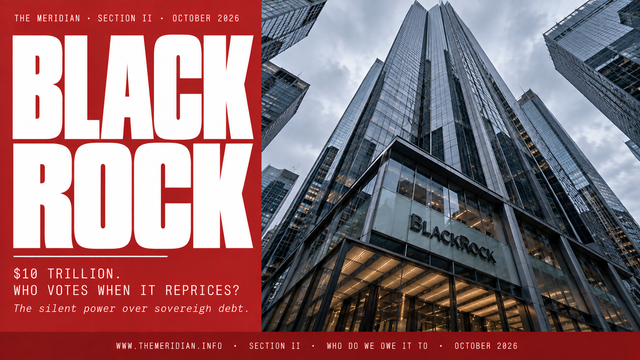
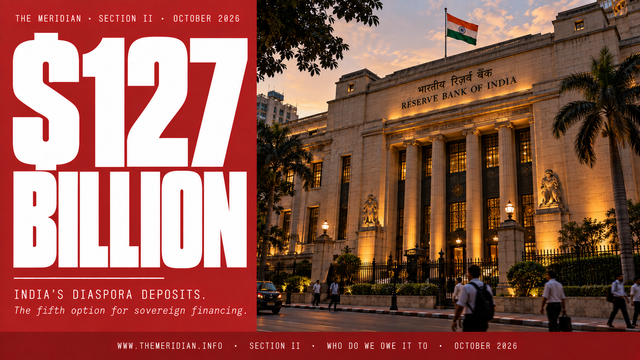
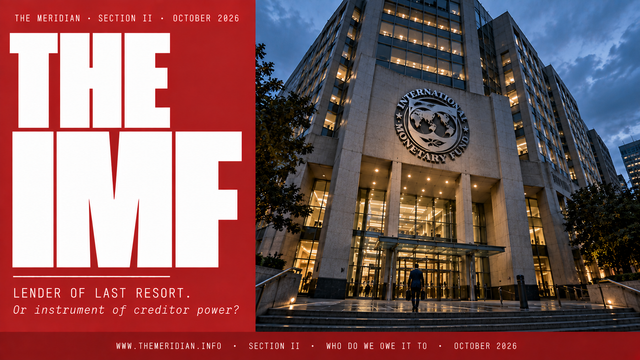
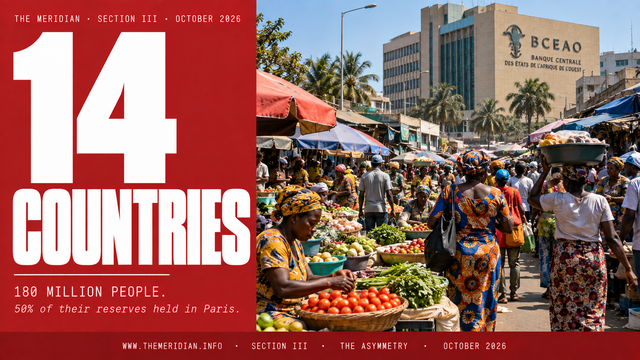
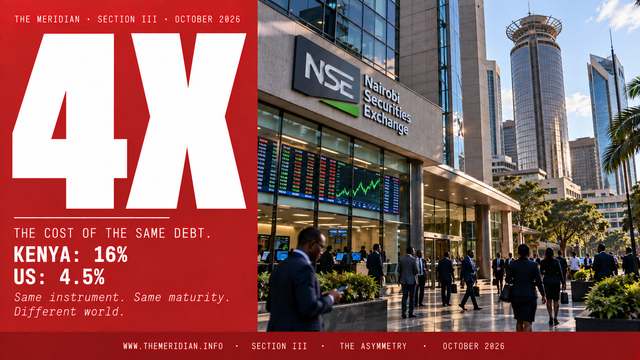
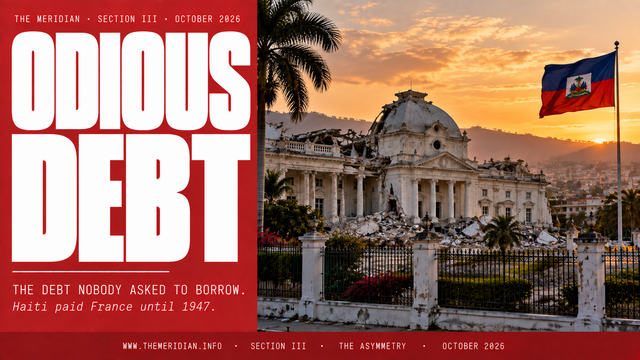
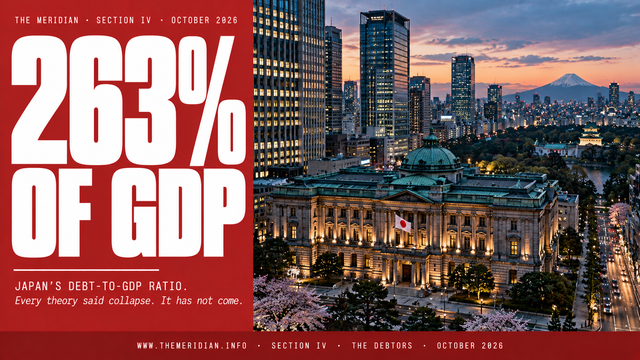
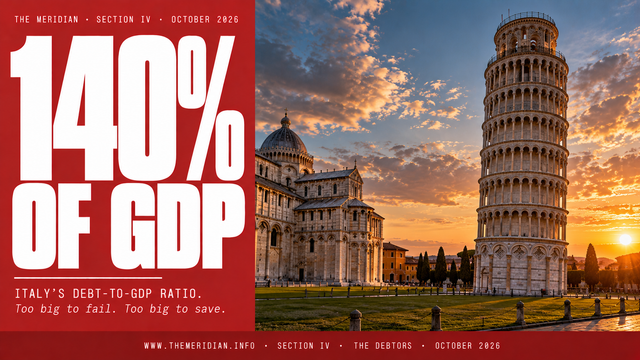
The Meridian March 2026 cover
Out Now
The Meridian
Volume 2, Issue 3 · March 2026
India 2.0: Power or Promise?
THE STATE OF THE MIND
Papers · Human Intelligence Unit
Working Papers
Papers · Economics · Political Economy · Institutional Analysis · Global South · Open Access
HIU Working Papers
WP-2026-01Elastic Political Hysteresis and Labour Market Persistence in a Small Island Developing State AuthorVayu Putra · Economics and Political Economy · The State of the Mind JELE24 · J21 · J31 · J42 · O15 · O17 Key ConceptElastic Political Hysteresis · independently derived · first SIDS application · Indian Ocean AccessOpen Access · March 2026 · Harvard Referencing papers · working papers · human intelligence unit · the state of the mind
Working Papers · Human Intelligence Unit

Papers

Original working papers in economics, political economy and institutional analysis, grounded in fieldwork and sustained inquiry across the Global South.

Scholarship that begins not in the library but in the field, and returns to the field to test what the library confirms.

Working Papers · Human Intelligence Unit

Scholarship from the Field, Not the Library

These papers emerge from sustained observation of the economies, institutions and political systems of the Global South, extended into formal analytical frameworks that engage the academic literature and make original theoretical contributions. Concepts independently arrived at. Frameworks grounded in fieldwork. Open access always.

Published Papers

Human Intelligence Unit · 2026
WP-2026-01 · Economics · Political Economy · Labour Markets · SIDS · Mauritius New · March 2026
Working Paper WP-2026-01 · March 2026 · Harvard · Open Access Elastic Political Hysteresis and Labour Market Persistence in a Small Island Developing State A Composite Framework Applied to the Mauritian Labour Market Paradox
Elastic Political Hysteresis Labour Market Segmentation Mauritius SIDS Rentier Economy Low Wage Equilibrium Blanchard & Summers Independent Convergence Technological Disruption Global South

This paper introduces elastic political hysteresis, an original concept independently derived from field observation of the Mauritian labour market paradox. It is the first application of hysteresis theory to a small island developing state in the Indian Ocean region. The composite framework integrates elastic political hysteresis with labour market segmentation, rentier political economy, technological disruption risk, and low wage equilibrium dynamics.

Read Paper
Author Vayu Putra
Affiliation Economics and Political Economy · The State of the Mind
Published March 2026
JEL Classification E24 · J21 · J31 · J42 · O15 · O17
Primary Contribution Elastic Political Hysteresis, independently derived from field observation before the academic literature was reviewed
Literature Gap First application of hysteresis theory to a SIDS economy in the Indian Ocean region

All Publications

Papers · Philosophy · Essays
Elastic Political Hysteresis WP-2026-01
WP-2026-01 · Economics · March 2026

Elastic Political Hysteresis and Labour Market Persistence

Introduces elastic political hysteresis, an original concept independently derived from field observation of the Mauritian labour market paradox. The first application of hysteresis theory to a SIDS economy in the Indian Ocean region.

Read Paper
The Eros of the Machine
Philosophy · Latest Essay

The Eros of the Machine: A Paradox of Radical Competence

A reflection on machine competence, human desire, and the strange philosophical tension between mastery, dependence, and the erosion of distinctly human meaning.

Read Essay
Ethical Minimalism
Philosophy · December 2025

Ethical Minimalism and the Institutional Condition

An examination of invisible institutional control and ethical minimalism grounded in human reality, without metaphysical comfort or ideological refuge.

Read Essay
On Fire, Words, and the Question of Civilisation
Philosophy · January 2013

On Fire, Words, and the Question of Civilisation

A meditation on communication, progress, and whether we have truly evolved beyond the first act of making fire and calling it mastery.

Read Essay
When It Rains: On Poverty and Memory
Personal Essay · July 2013

When It Rains: On Poverty and Memory

Childhood in an iron-sheet house and the dignity of simple living. A personal account of what poverty teaches about what matters and what does not.

Read Essay
On Materialism, Mortality, and What We Leave Behind
Philosophy · August 2013

On Materialism, Mortality, and What We Leave Behind

Genuine happiness and living as intended after witnessing cremation. A meditation on what outlasts us and what we spend our lives accumulating instead.

Read Essay
Brighton storm: when natural forces interrupt constructed order
The State of the Mind · Human Intelligence Unit We observe first. We theorise from what we observe. We then situate what we have derived within the existing scholarship.
About the Human Intelligence Unit

Original Concepts, Not Applications

The Human Intelligence Unit is the research arm of The State of the Mind. It produces original analytical work that emerges from sustained observation of the economies, institutions and political systems of the Global South. That observation is grounded in journalism and extended into scholarship. The two disciplines do not operate in sequence. They operate simultaneously, each sharpening the other.

The Unit operates from the conviction that the most important concepts in development economics, governance analysis and political economy are often not found in the existing literature. They are waiting to be derived from the data by someone paying close enough attention to the right reality for long enough. Our working papers are the formal record of that derivation.

Several of the analytical concepts developed in our papers were arrived at independently through field observation before the relevant academic literature was reviewed. A concept discoverable from the data alone, without prior knowledge of its theoretical name, is a concept whose validity does not depend on the literature that later confirms it.

All papers are offered freely, without registration and without any form of paywall.
Standards of Scholarship

Six commitments
First Commitment

Fieldwork before literature

Our frameworks are derived from observation before they are situated within existing scholarship. We arrive at concepts from the data, then locate them within the literature. This is a methodological commitment to grounding theory in reality rather than reality in theory.

Second Commitment

Original contribution, not application

We do not publish papers that simply apply existing frameworks to new cases. We publish papers that extend, adapt or challenge existing frameworks in ways that contribute something to the literature that was not there before the paper was written.

Third Commitment

Independence without capture

These papers are produced without grant funding, donor conditionality or institutional affiliation that constrains conclusions. We are accountable to the argument and the evidence, not to a funding body or editorial agenda that predates the research.

Fourth Commitment

Rigorous and readable

Academic rigour and plain prose are not opposites. We write with the precision that serious argument requires and the clarity that serious readers deserve. Jargon that protects weak ideas is not a feature of this publication. It is a failure we actively resist.

Fifth Commitment

Global South first

All papers are freely available. Scholarship produced from and about the Global South should not sit behind paywalls accessible only to institutions in the Global North. These papers are a contribution to knowledge, not a product for sale.

Sixth Commitment

Human consequences as the test

Every framework, concept and policy implication is measured by what it means for actual people. Theory that cannot illuminate the lived conditions of those it purports to explain illuminates nothing. The test of any claim is its consequence.

All working papers are offered freely. No registration, no paywall, no condition of access beyond the willingness to read carefully.

For correspondence or engagement with our work, we welcome thoughtful contact.

© The State of the Mind · Human Intelligence Unit · Working Papers